


11 min to read
|Jan 2023
A Snowshoe Safari in Japan’s Winter Wonderland
 1
1 Print or download


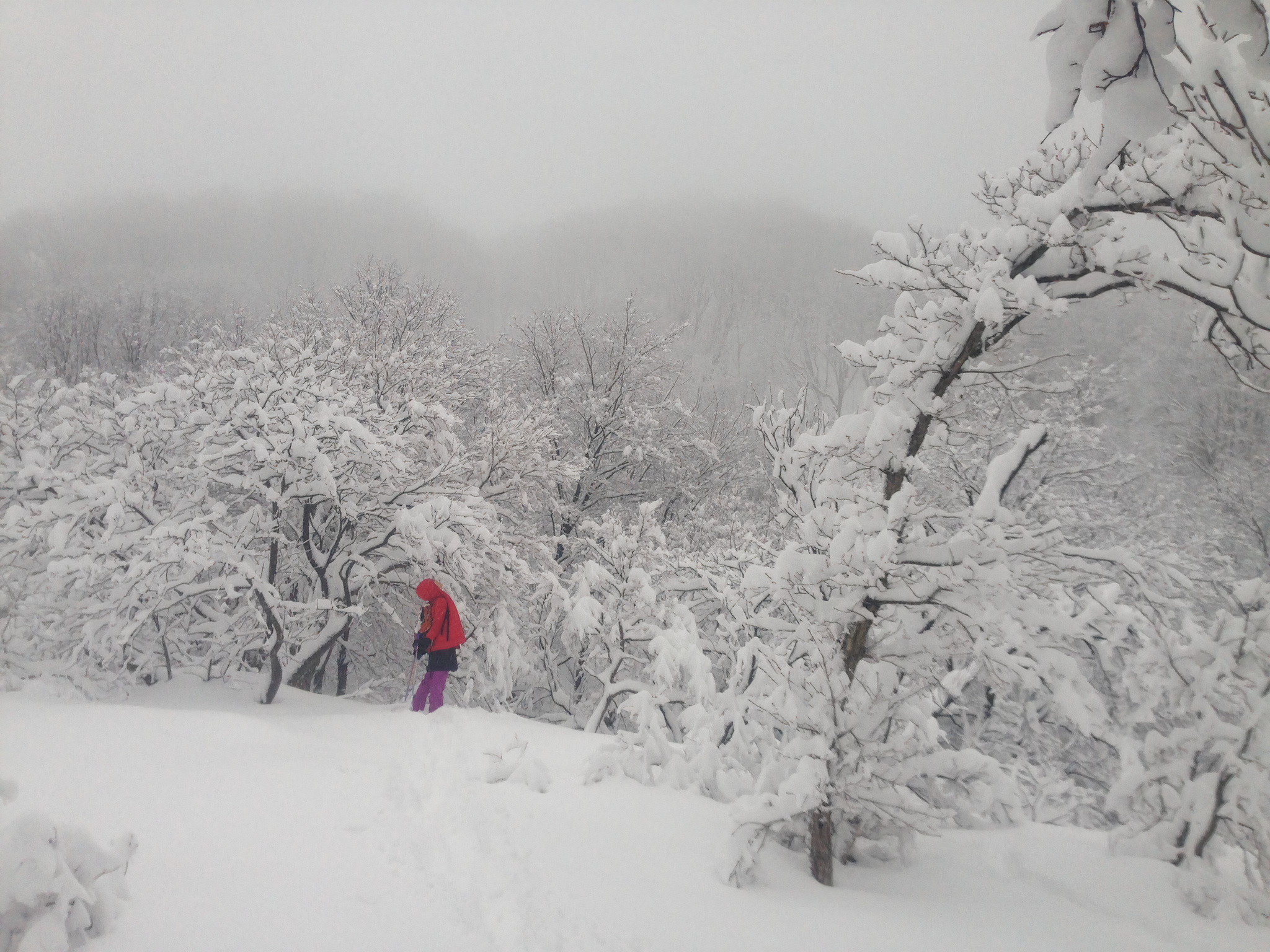
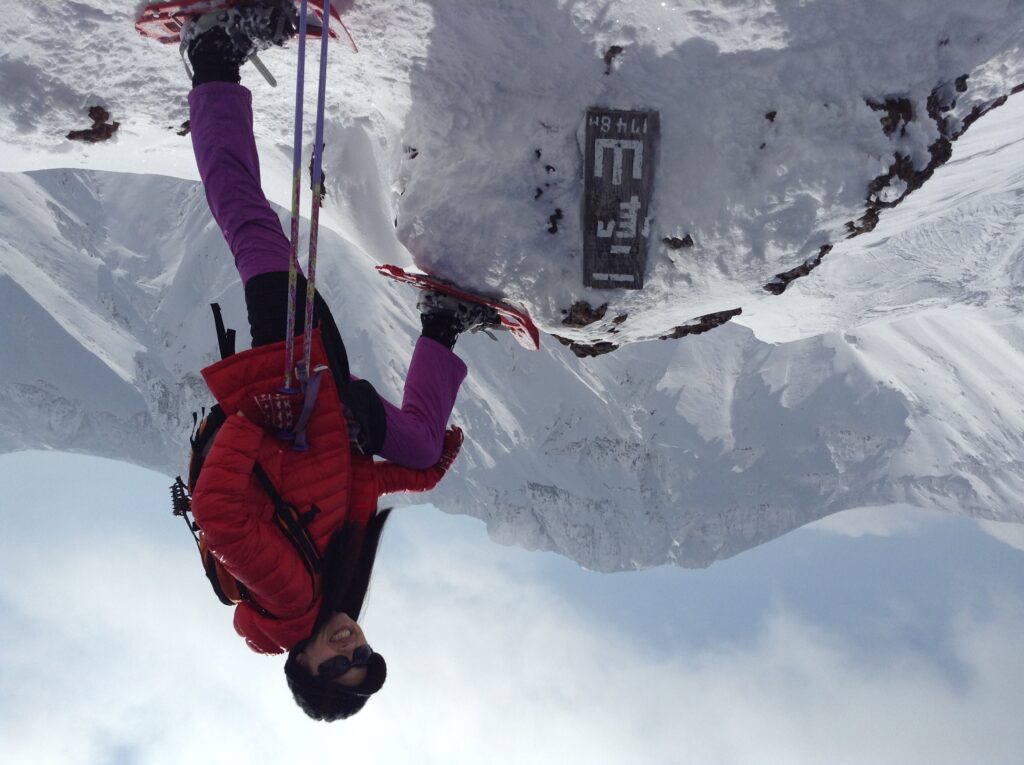
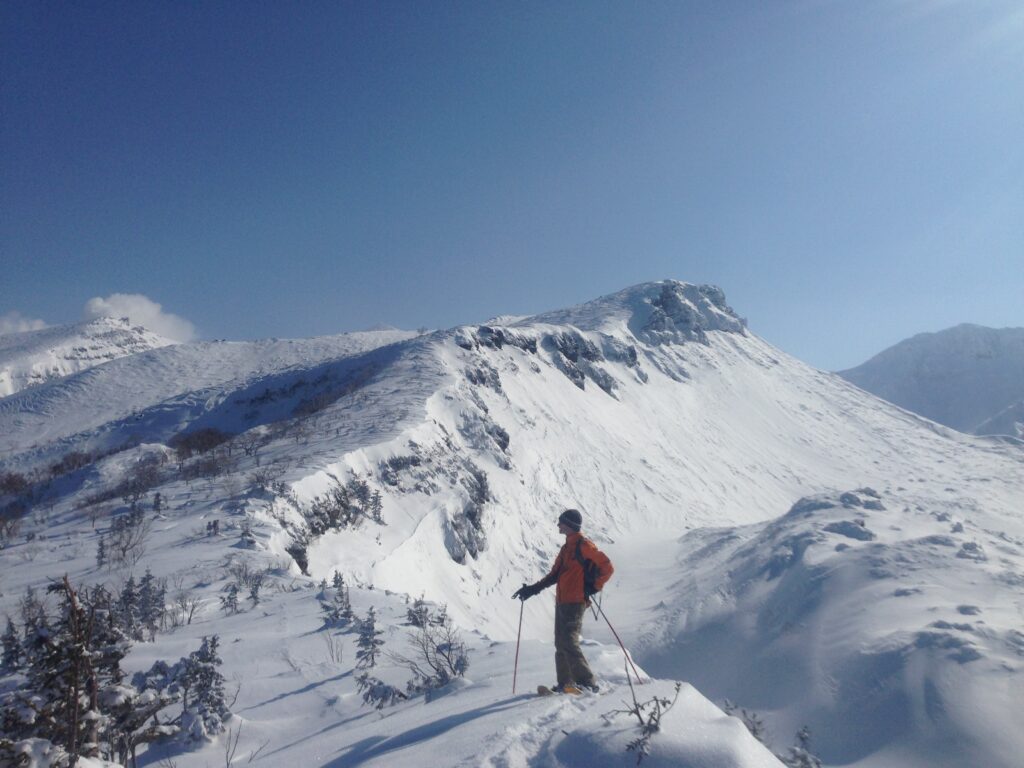
I pulled off thick gloves to shoot photographs as fast as possible… before my hands froze in the 20 F air. Through the camera, I saw the summits of the northern Japanese Alps.
My wife and I live in Niigata, Japan, and each winter, yuki guni (snow country) gifts us with snowy vistas and soaks in natural hot springs.
For this hike, we’d followed a trail originating at the Ryounkaku inn on Hokkaido, Japan’s second largest island. We’d taken off with nothing more than a map, gifted to us by the inn manager.
Soon, we’d return to Ryounkaku, where we’d share hot sake and warm up in a natural hot spring.

©GREG GOODMACHER
Where and How to Snowshoe in Japan
Japan’s the snowiest country in the world—despite the fact that most of its regions enjoy a subtropical climate.
Snow country—where snow falls heavily from December through April—stretches along the Sea of Japan, from the southern tip of the mainland to the bottom of Hokkaido.
There’s even a name for Japan’s dry, powdery snow: Japow. As a result, snowshoeing’s becoming increasingly popular in Japan.
The sport is more accessible than you’d think.
Beginners don’t fall as often as people learning to ski or snowboard. Plus, it’s much easier on joints than other winter sports.
My wife damaged a knee in a skiing accident years ago: she can no longer ski, but she snowshoes.
And though I still ski, snowshoeing’s become my main winter activity.
New snowshoes cost between $100 and $300—a third less than new skis, and they’ll last you even longer. (My last pair of snowshoes made it 25 years before I replaced them.)
Lift tickets are often unnecessary because in snow country, snowshoers can tackle farms, orchards, parks, forests, mountains, bike routes, hiking trails, unplowed roads… you name it.
Plus, most ski resorts in Japan’s snow country offer admission-free snowshoe routes with spectacular views.
Lessons are reasonably priced at around $50, and beginners generally don’t need more than one.
I learned by watching and following experienced friends’ advice: wear layers and ask locals about avalanche conditions.
The sport has given my wife and me a new appreciation for Japan’s snow country and a new mode for exploring.
Read on to learn what we’ve encountered in our snowshoeing journeys…
A Tea Ceremony in the Snow
My wife and I have combined snowshoe sojourns with ethereal cultural festivals.
We snowshoed from our stay in Tokamachi City in the Niigata prefecture to the Tokamachi Snow Festival. On the outskirts of this quaint town, locals create house-sized snow sculptures of manga (Japanese comics) characters, castles, trains, and religious figures.
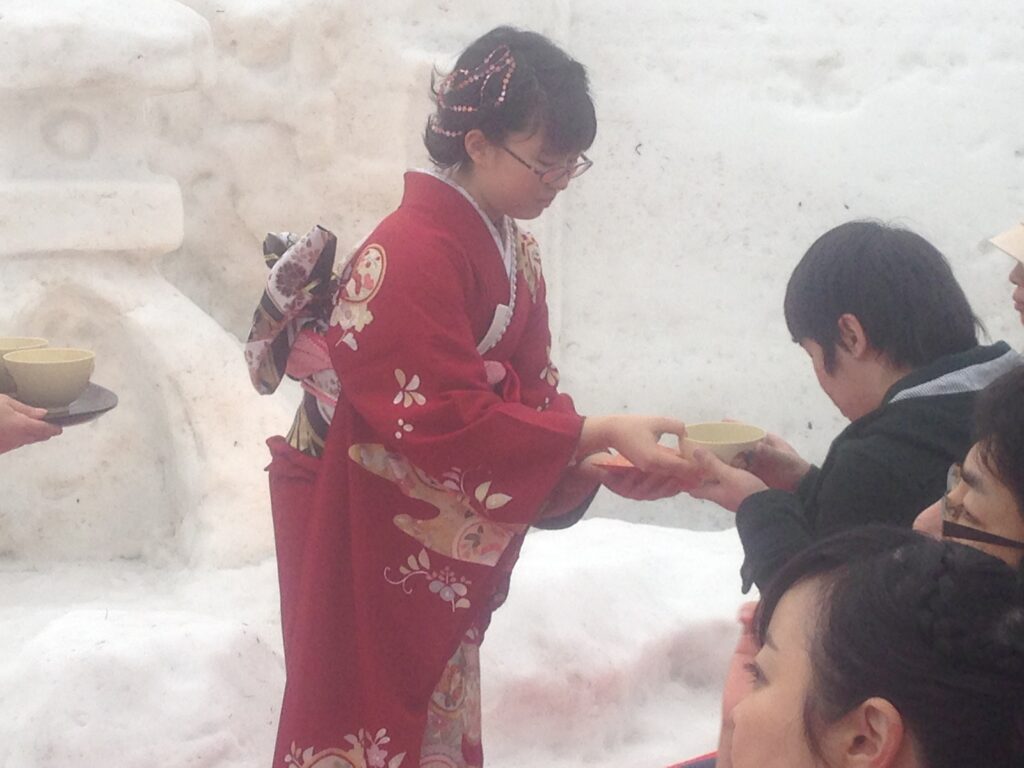
One consistent yearly feature: Tea masters and tea ceremony students prepare bowls of fragrant steamy matcha behind a snow wall carved to resemble a castle wall.
Carrying bowls of tea and wearing kimonos, they walk on snow paths to the guests sitting on benches made of packed snow.
Musical performances and kimono contests round out the three days and nights of festivities.
Tokamachi’s hand-made kimonos are highly esteemed in Japan. They are judged based on design and craftsmanship, with top-quality ones selling for up to $15,000.

Snowball Fights in Duck Costumes
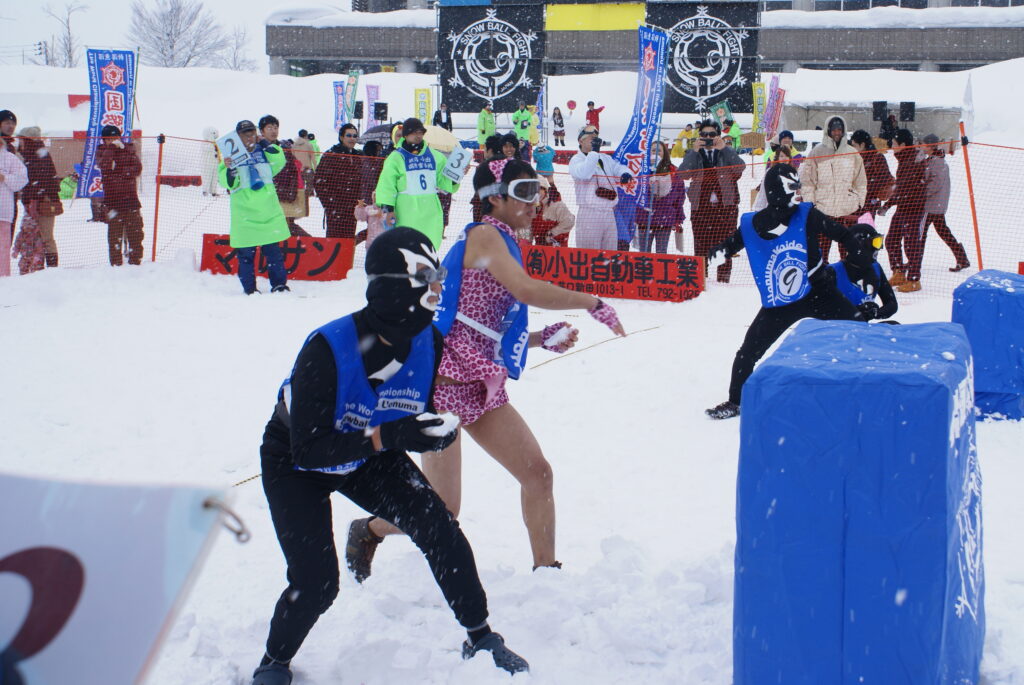
If you’re looking for an experience even zanier than wandering amongst giant snow sculptures, check out the International Snowball Fighting Competition in Uonuma City, Niigata Prefecture.
The name is somewhat of a misnomer, given that the competition is equal parts costume contest and snowball fight. (Picture bikini-wearing men lobbing snowballs in freezing temperatures.)
Yearly costume themes have included Ghibli or Hollywood movie characters, Japanese monsters, Mario Kart characters… the list goes on.
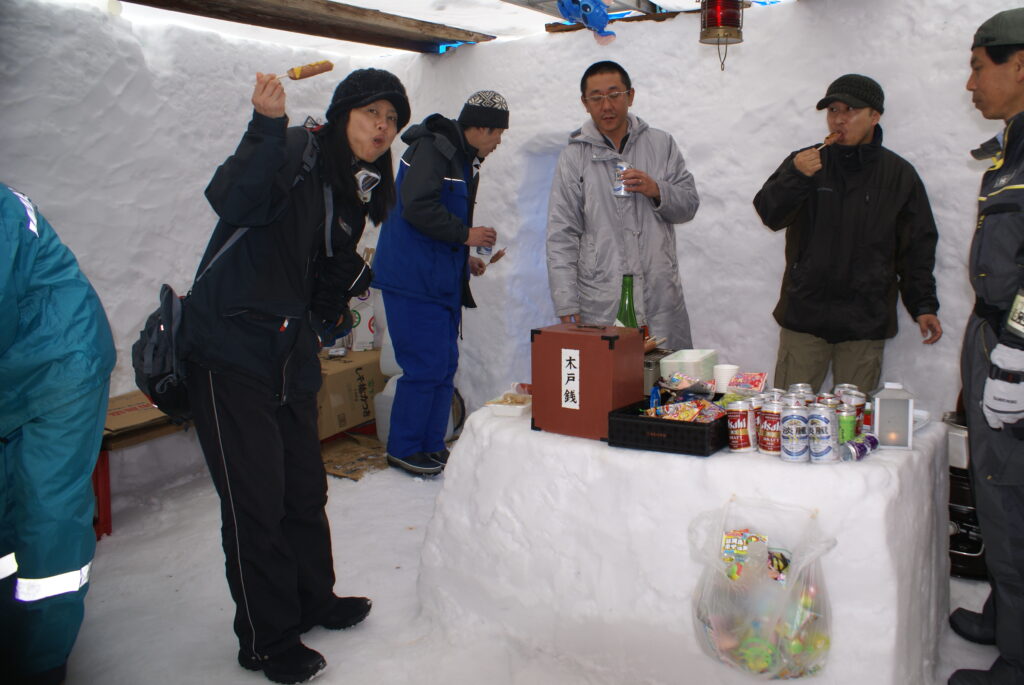
Here, locals build restaurants and bars from snow. They cook or heat fish, local soba (wheat noodle) dishes, and sake on charcoal and wood fires.
The smells of smoked duck, salted river fish, and various yakitori (meat and vegetable skewers) sizzling over coals enticed me to try everything.
And I mean everything. Some older Japanese men suggested I drink a cup of local hot sake with a small, barbecued fish soaking inside.
I was glad to try it… but I’ll stick with fishless hot sake in the future.
Fueled by sake and yakitori alike, my wife, friends, and I competed in an early round of the snow-fighting competition.
Wearing duck costumes and quacking, we threw, dove, and dodged snowballs on an official snowball fighting court.
“
Despite offering a bottle of sake to the umpire as a bribe, our rivals—a team of sake brewers—lost to our superior snow-throwing skills.
However, some snow-throwers with supernatural (demonic?) aim slaughtered us in the second round… freeing us to enjoy more nutty merriment on the snow.

©GREG GOODMACHER
Going on a Safari… in Snowshoes
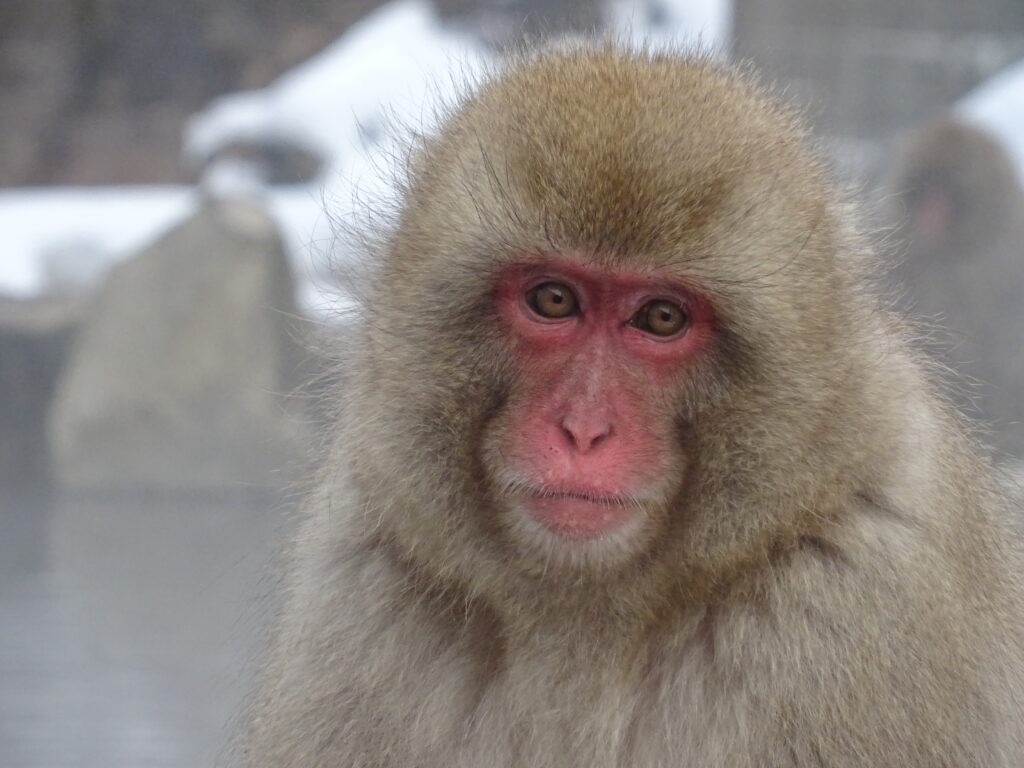
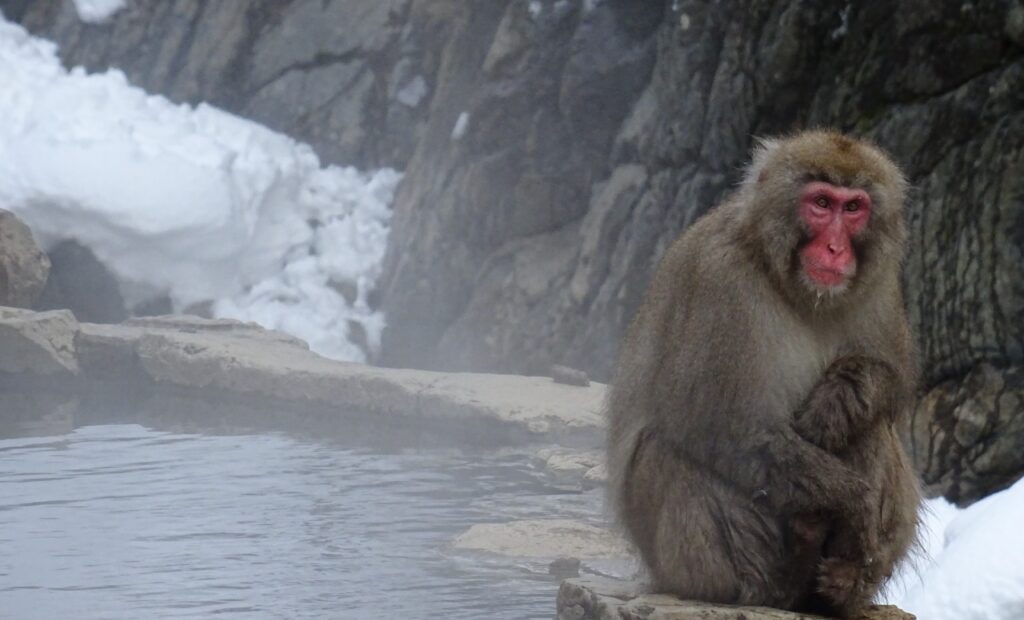
Maybe you’ve heard about or seen videos of the famous “snow monkeys” of Nagano Prefecture.
These Japanese macaques roam Nagano’s Joshinetsu Kogen National Park and soak in the Jigokudani Monkey Park hot springs during the coldest winter months.
On a typical winter day, thousands of tourists stand along a crowded trail to view the famous—and furry—bathing beauties.
But on the morning of our visit, a blizzard dumped almost three feet of snow on the forest trail.
The hikers couldn’t enter the park… but clad in snowshoes, we strolled through thigh-high powder to see dozens of macaques soaking in the steamy springs.
Babies and mothers tenderly clasped each other in the baths. Juveniles, like young children, scampered in and out of the hot water, splashing and annoying their elders.
Instead of the constant clicking of hundreds of cameras, we heard snowflakes land on our down jackets.
Later, my wife and I snowshoed along a winding river on the forested fringe of the Kagura Ski Resort.
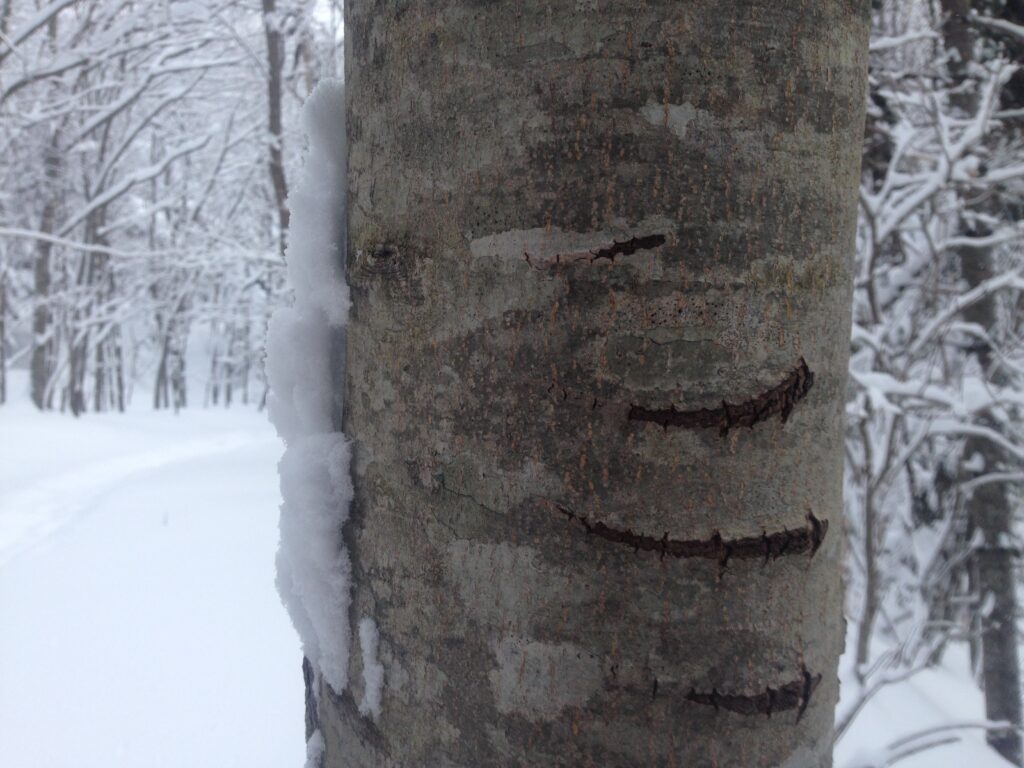
A gondola packed with skiers flew overhead. Squirrel footprints, plants gnawed by rabbits, trees scratched by bears, and monkey handprints were all visible after a recent snowfall, and I found myself absorbed in animal tracks.
That’s when I felt a pair of eyes resting on me.
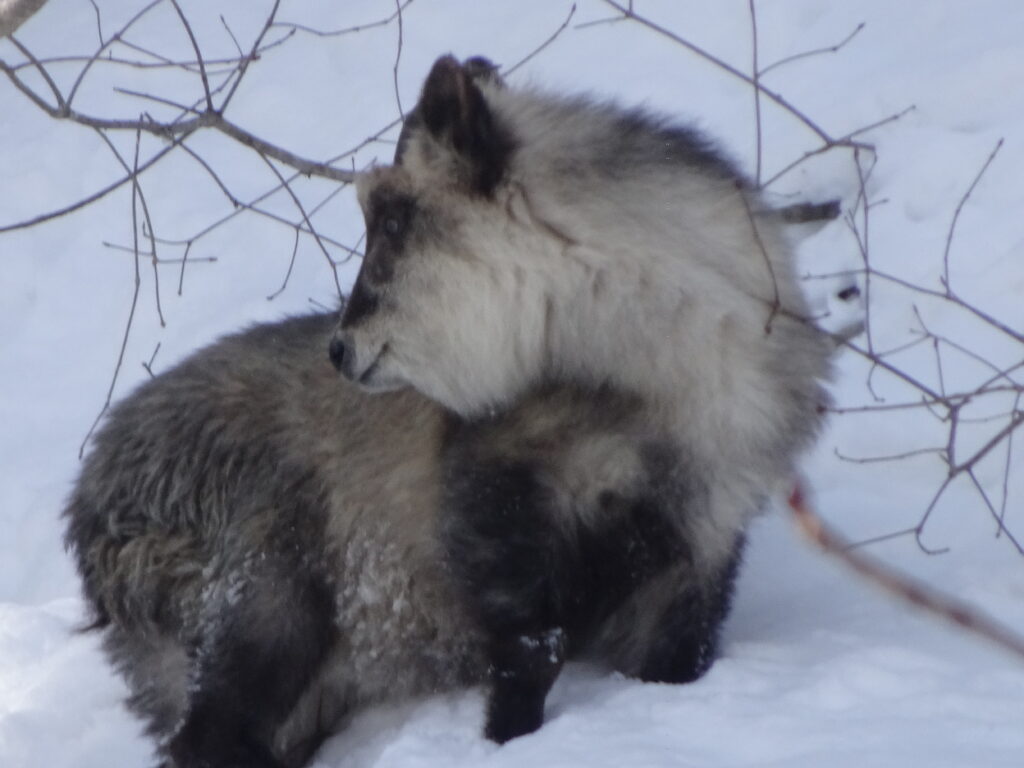
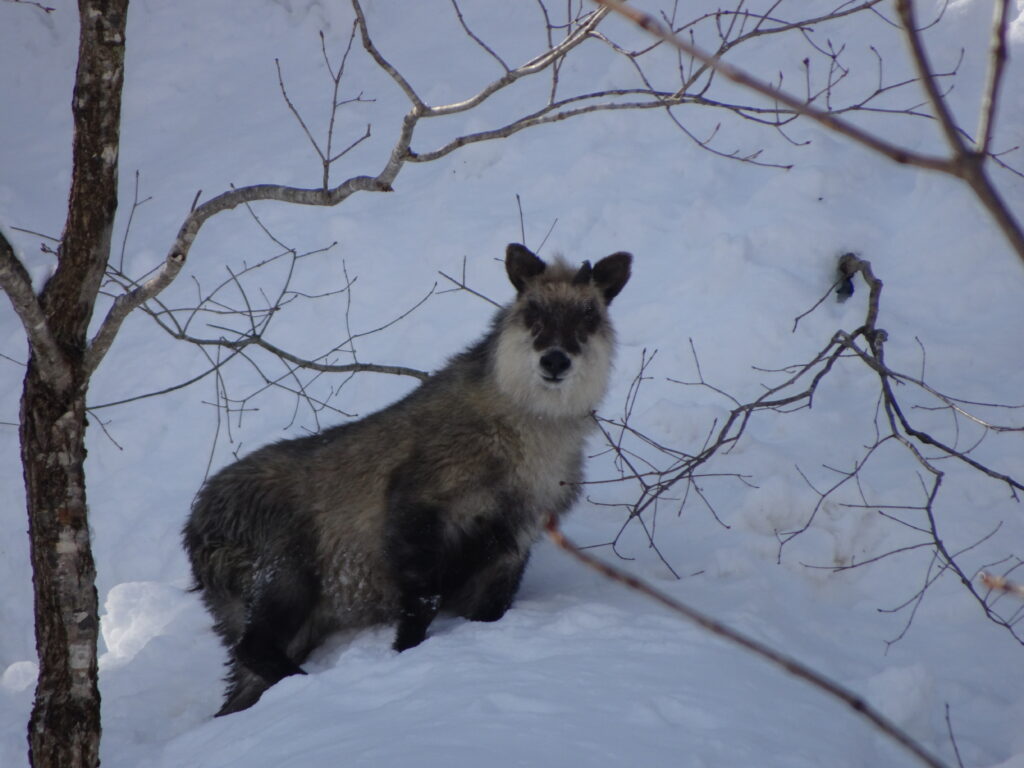
I glanced up to see an animal, standing as high as my chest, staring at me with strange, horizontal pupils.
It was a thickly furred Japanese serow, its baby in tow, standing less than 15 feet away.
It was frightening at first sight—the goat-like adults have horns like curved knives—but the animals are harmless herbivores.
I reached for my camera as they turned and moved uphill but too soon, they disappeared behind a wooded ridge.
That’s another perk of snowshoeing: it gets you to sights you’d never be privy to otherwise.
READ BEFORE YOU GO
Before visiting Japan, read Yasunari Kawabata’s novel, Snow Country. Kawabata is Japan’s first winner of the Nobel Prize for Literature.
He wrote the book, a romance set in the early twentieth century, while lodged at the snow country inn of Takahan in Yuzawa.
If you follow in his footsteps and visit Yuzawa, don’t miss the Snow Country Museum, where you’ll learn how people once survived in deep snow without technology. Purchase the 500¥ ($3.50) admission tickets at the museum’s entrance.
Snow Monsters, Ice Anglers, and Frozen Waterfalls in Zao
Mysterious silhouettes, numbering in the thousands, stand on the slopes above the ski village of Zao, Yamagata.
Locals call them snow monsters, but really, they’re a natural phenomenon.
Winter wraps fir trees in layers of snow, ice and frost, then sharp winds shape these layers into monstrous figures.
“
My wife and I always look for snow monsters when we snowshoe in Zao. On one visit, we joined a tour run by the Zao Tourism Association that provided us snowshoes made of reed and ropes. Called kanjiki, these Japanese snowshoes date back hundreds of years.
On another, we walked amidst snow monsters after riding a gondola to the highest ski station in the village.
Zao is ideal for snowshoeing over frozen lakes and ponds, too. We often run into ice anglers here, dangling baited lines into holes drilled into the ice.
Sometimes they’re sheltered in miniscule tents, equipped with heaters, and other times, they’re exposed to the harsh elements.
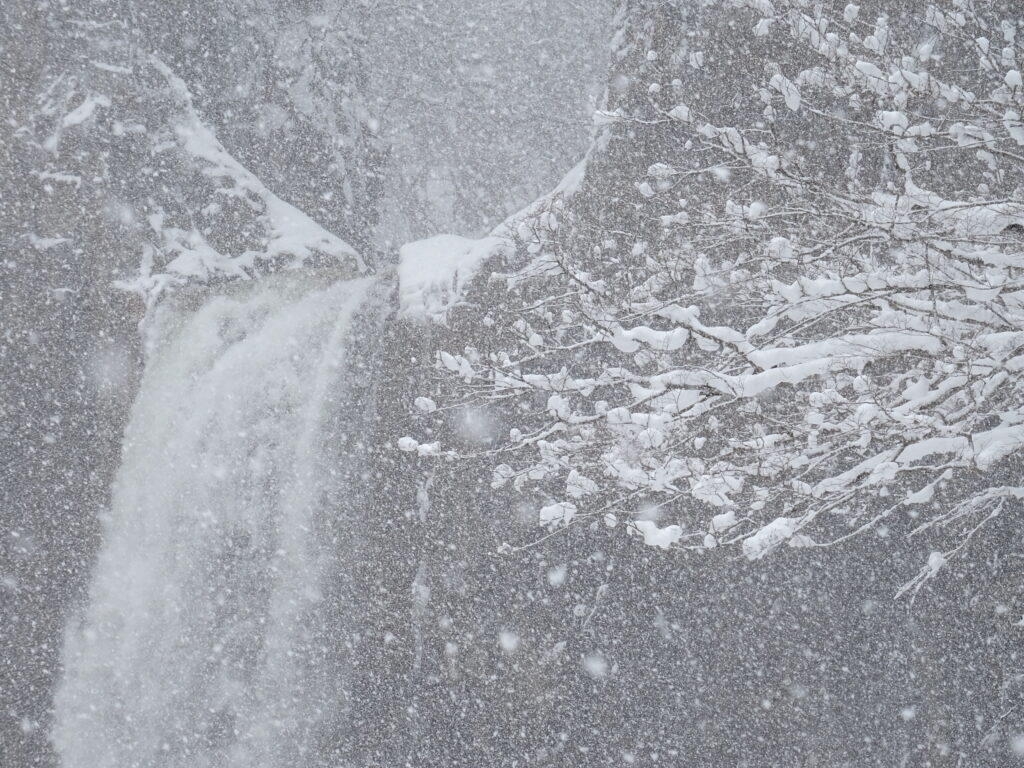
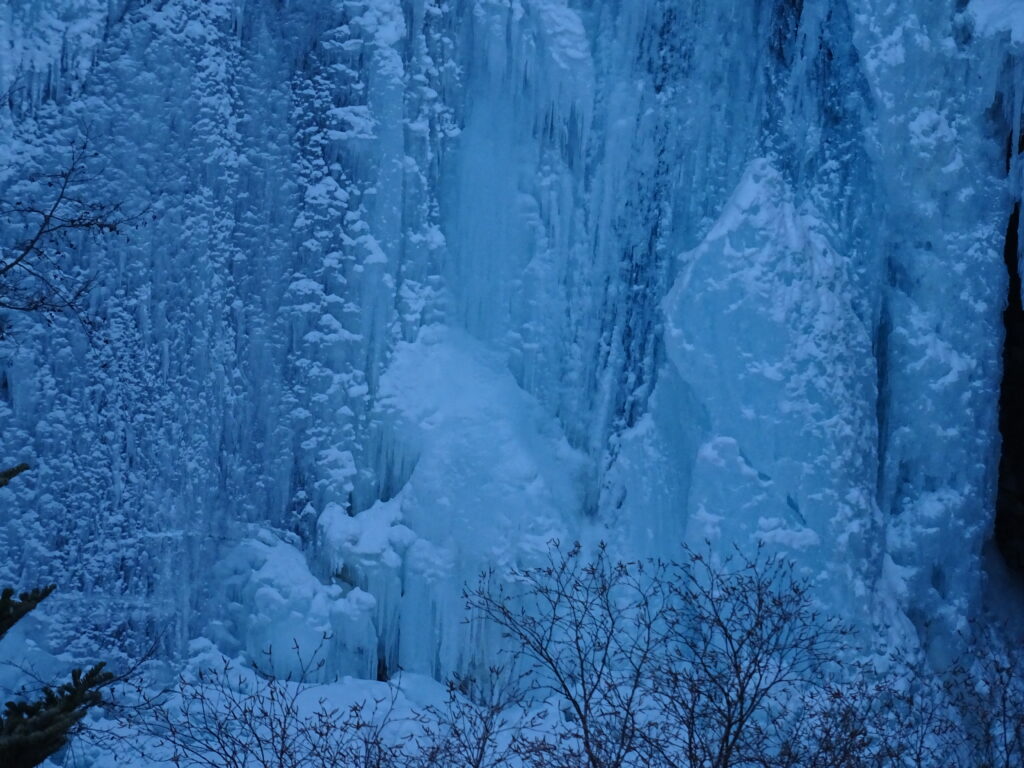
To witness frozen waterfalls—a feat of nature like the snow monsters—we head to Zengoro Falls in the Norikura Highlands outside Matsumoto City, Nagano.
Signage posted on poles above snow level, in addition to well-packed trails, make finding Zengoro Falls and other natural attractions easy.
The winding path provides postcard-perfect vistas along the way, but Zengoro Falls is the most stunning. After passing a snow-covered walking bridge, you’ll be awestruck by the 60-foot-plus crystalline sculpture. Because my wife and I are experienced snowshoers, we usually find trails ourselves, but tours are useful when we’re learning about a region.
Snowshoe tour guides often point out overlooked trail features… for example, the claw marks bears leave on trees when they search for nuts and berries.
They’ll also teach you to avoid causing—or getting caught in—avalanches, which are a rare but real risk of snowshoeing on mountainsides.
COZY RETREATS TO STAY IN WHILE SNOWSHOEING
If visiting Tokamachi, stay at the Matsunoyama Onsen Ryokan Chitose. This family-run Japanese inn serves gourmet food prepared with locally-grown, -raised, or foraged ingredients. Be sure to bathe in the indoor and outdoor hot springs, including a private bath couples can reserve.
The Okushiga Kogen Hotel by Jigokudani Monkey Park makes for a wonderful abode, too. Located at the bottom of nearby ski runs, one of its three restaurants, Gendai, serves the best French food I’ve tasted in Japan.
Norikura Kogen has numerous hotels, but the Awanoyu Inn, located in nearby Shirahone Onsen, is incredible. You might spot foxes patrolling the forest from your hotel room. If you join them outdoors, opt for the mixed-sex outdoor onsen, famed for its white sulfurous mineral water.
In Zao, stay at Pension Apple, a short drive from the gondola lift that carries visitors to the snow monsters’ habitat. The owners are a vivacious, wine-loving couple in their 60s who encourage their international guests to share wine and good times. From the outdoor hot spring, views of snowy woods stretch for miles.
In Yuzawa, lodge at Takahan to sleep and bathe in a Japanese ryokan with a history dating back more than 900 years. Many important figures in Japanese history, including Japan’s first Nobel Prize for Literature winner, Yasunari Kawabata, stayed there. Enjoy the views from the simple onsen.
The Dollar’s Strong—Now’s the Time to Book
If you’re not based in Japan, a trip over to snowshoe in the winter is worth it. Right now, the yen is weaker than it has been in years, so your money will buy you more than you expect.
The Nozawa Onsen Tour in the hot spring town of Nozawa, Nagano, leads lovely hikes for beginners. Activity Japan provides a wide range of snowshoe experiences with English-speaking guides, including evening walks.
BBB Aomori tour guide Kazuo Hanada leads a combination snowshoe and snow bike (mountain bikes equipped with thick tires) tour in rural Aomori. He makes excellent coffee and hot sandwiches in the snow.
EASY TRAILS NEAR THE TOKAMACHI SNOW FESTIVAL

A tip for amateur snowshoers: You can find two relatively easy snowshoe paths outside of Tokamachi. A well-worn trail takes your through the aptly-named Bijinbayashi, or “forest of the beauties,” where sunrays slip through the forest canopy and cause the snowy branches of tall, slender beech trees to glitter.
From the forest, you can climb the hilly, snow-filled Hoshitouge Terraced Rice Field. These small, terraced fields, built into the mountainside by farmers generations ago, are a popular tourist attraction when ripe and golden in autumn. But during this snowy time of year, we found ourselves enjoying the scenery alone.

©GREG GOODMACHER
Japan’s Winter Wonderland In Photos

Also in This Issue
Curiosities, Quirky Tidbits, Travel Hacks
EXPERIENCES Visit One of the World’s Only Petrified Waterfalls For thousands of years, water has percolated through the porous limestone...
Top Real Estate Markets with Comfortable, Spring-like Climates: Your Questions...
◼ Dave says: We’re RETA members and have purchased a condo in Samsara in Tulum. Although we are very happy and excited about spending...
A $1 Million Medical Bill and a Joke Led Us...
Name: JP StonestreetFrom: Denver, COLiving in: Cuenca, Ecuador It was chilly and raining as my wife Amelia and I hailed a cab outside...
Curiosities, Quirky Tidbits, Travel Hacks
EXPERIENCES Visit One of the World’s Only Petrified Waterfalls For thousands of years, water has percolated through the porous limestone...
Top Real Estate Markets with Comfortable, Spring-like Climates: Your Questions Answered
◼ Dave says: We’re RETA members and have purchased a condo in Samsara in Tulum. Although we are very happy and excited about spending...
A $1 Million Medical Bill and a Joke Led Us to Ecuador
Name: JP StonestreetFrom: Denver, COLiving in: Cuenca, Ecuador It was chilly and raining as my wife Amelia and I hailed a cab outside...