


11 min to read
|Jan 2024
Curiosities, Quirky Tidbits, Travel Hacks
 1
1 Print or download


CURIOSITIES
Only Three Women in the World Make This Divine Pasta

©LUIS LEAMUS/iSTOCK
For over 300 years, the women of the Abraini family have served the world’s rarest pasta, su filindeu, to pilgrims trekking across Sardinia.
Su filindeu translates literally to “threads of God,” and until recently, its recipe has been almost as elusive as its origins.
Today, only three Abraini women are still able to make it—among them Paola Abraini. In the village of Lula, she coaxes the su filindeu dough until it’s the consistency of clay, rolls it into strands not much thicker than thread, weaves the resulting noodles into intricate layers, and finally dries it in her garden under a hot Italian sun.
It’s a time-consuming task. Abraini will work five hours each day during the month leading up to the biannual Feast of St. Francis, when she serves pilgrims the dish.
There are only three ingredients—semolina wheat, salt, and water—but as Abraini said in an interview with BBC, the most important is elbow grease.
And that seems to be an ingredient only she can provide.
Today, renowned chefs, including the likes of Jamie Oliver, are traveling to the island to learn it. Yet, despite Abraini’s willingness to demonstrate her technique—once fiercely guarded—few if any have been able to replicate it. (Watch Oliver’s failed attempt here.)
Neither have the youngest generation of the family, nor the local girls Abraini has attempted to educate. All claim that the technique is too difficult. In all likelihood, Abraini, in her 60s, will be the last maker of su filindeu.
You can work up hunger for the dish by making the pilgrimage yourself in May or October… or you can simply pay a visit to Il Rifugio in the Sardinian city of Nuoro. (Abraini makes the dish for several restaurants on the island, but check that it’s on the menu before you go.)
In eating it—whether after a pilgrimage or merely a stroll from a nearby hotel—you’ll join the few who’ve tasted the “threads of God.” —Megan Ritchie
FESTIVALS
The Origins of Auld Lang Syne

©OKTAY ORTAKCIOGLU/iSTOCK
Robert Burns is celebrating his 265th birthday, and you’re invited.
On January 25 each year, Scots turn out for Burns Supper, a celebration of the iconic poet, more affectionately known as “Rabbie Burns.” Even if the name’s unfamiliar, you’ve certainly encountered Burns’ work. He wrote Auld Lang Syne and is behind the saying, “The best laid schemes of mice and men often go awry.” That’s a translation—Burns wrote in the Scots language, which is partially why he is so lauded in his homeland. His use of the language helped revitalize Scottish patriotism during a time of cultural oppression. No wonder Scots celebrate Burns centuries later.
Though it’s not unusual to celebrate solely with friends or family, Burns Supper is best enjoyed in a large venue with bagpipers. Guests will first be “piped in,” or ushered to their seats while a bagpipe plays. Once all are seated, the host will say the Selkirk Grace:
Some hae meat an’ canna eat
An’ some wad eat that want it
But we hae meat an’ we can eat
And sae let the Lord be thankit.
Then comes the haggis, or minced sheep organs. The haggis is also piped in—and then it’s serenaded with the Address to a Haggis, a comedic tribute to “the great chieftain of the sausage race.”
You’ll indulge in haggis, neeps (turnips), tatties (mashed potatoes), and—of course—whisky. Once your dram is drained, there are more toasts to be given: the Immortal Memory (a speech lauding Burns), the Address to the Lassies (a male guest’s hilariously crude “ode” to women), and the Reply to the Laddies (a female guest’s witty retort).
It’s a can’t-miss event if you’re in Scotland (find a Supper to join here), but you can still attend if you’re stateside. Search “St. Andrew’s Society of (your region),” and you’ll likely find a Burns supper being hosted near you. Don’t fret if you’re not Scottish. You’ll be welcomed all the same. —Megan Ritchie
TRAVEL SMART
Don’t Give Papaya: Street-Smart Tips for Traveling
In Colombia, there’s a well-known saying: No dar papaya.
Translated literally, it means “don’t give papaya,” but it has nothing to do with the sweet local fruit. Instead, it’s a reminder shared among locals: don’t make yourself an easy target.
The saying originates from Colombians’ love of papaya. If you put out a plate of papaya, it disappears quickly. The same can be said for your valuables if you make yourself low-hanging fruit.
And that’s a handy guide for travelers and expats the world over. Below, I’ve collected my top tips for staying street-smart, no matter where you are.
1. Keep to the inside of sidewalks. Stand too close to a street corner, and a crook can come whizzing by on a motorcycle and swipe your phone from your hand.
Be especially cautious of this while waiting for rides.
Tourists checking their Uber’s license plate number (as they should!) often ignore their surroundings.
2. Snap your pics quickly. As travelers, we often have our expensive cell phones glued to our hands, ready to take a photo of tourist sites and scenery. But phones are the easiest thing for a pickpocket to steal.
Look around before taking your snapshot, then put your phone away—preferably somewhere hidden, like an under-the-shirt belt.
3. Leave your jewelry and cash at home. Or, better yet, in a safe. Robbers are opportunistic and on the lookout for wealthy tourists. Don’t become their target by wearing a watch that screams “I have money.”
If you need cash during your travels, split it up into a few different places—a pocket and a purse, for example—so if you do get pickpocketed, they don’t get it all.
4. Follow the lead of locals. While traveling, I often notice locals frequently sliding their phone away, or switching their backpacks to wear them on their front.
That’s because they’re more attuned to their city’s red flags—which plaza is prone to pickpockets, or who’s subtly eyeing your shiny earrings. If they’re exercising caution, you should, too
5. Meet up with fellow travelers. Traveling solo can be a great way to make new friends and gain insider know-how. Reach out on expat Facebook groups before you go.
On your first day in an unfamiliar locale, I recommend joining tours so you’ll be in a group of fellow travelers.
Most cities offer free ones, and I loved the Real City Tour in Medellín. —Kirsten Raccuia
UNIQUE STAYS
A Treehouse Escape in Colombia
To anyone who grew up in the 60s watching or reading Swiss Family Robinson, Las Islas hotel is a jungle fantasy come to life—treehouse included.
Las Islas is tucked away on the island of Barú in Colombia. Although only 45 minutes by boat from old city Cartagena, Barú feels worlds away, like you’re a castaway on a remote island—albeit with excellent restaurants and plush bathrobes. Arriving guests are greeted with a dockside reception, then chauffeured to their villa by golf cart (no cars allowed).
Here you discover two things: 1) This is not Fritz Robinson’s treehouse. These treetop hideaways include air conditioning, an outdoor jacuzzi, cable TV, a large comfortable bed, and a wraparound balcony, and 2) You may not want to be rescued from this island, ever.
First-night guests are invited to happy hour at the hotel clubhouse above the tree canopy. After dark, a Celestron CGX-L telescope offers a glimpse into the solar system. A trip highlight is the Bioluminescent Plankton night viewing tour in the shallow waters of the mangrove.
Colorful parrots and flamingos are here, plus monkeys and the rare white-headed marmoset. (Despite promises, I didn’t see a sloth until I caught my reflection at the beachside bar.)
Rates start at $300 per night. You can book here. —Paul Patridge
EXPLORATION
Fonda to Mercado—a Foodie’s 24 Hours in Panama City

©DIEGO_CERVO/iSTOCK
The best way to explore Casco Viejo (Old Town) in Panama City is on foot—and through its food.
For a down-home breakfast, start at Fonda Lo Que Hay (open Wednesday through Sunday). In Panama, you’ll often spot fondas—cheap, unpretentious spots to grab a bite. Owned by famed chef José Carles, Fonda pays homage to this particular Panamanian quirk and serves up authentic dishes from sancocho (a stew chock-full of meat and veggies) to the local catch of the day.
Don’t worry if you can’t nab a reservation through their website; Fonda keeps most of its restaurant available to walk-ins.
Then, after you’ve worked up your appetite (again) with a stroll along Paseo Esteban Huertas, head to Mercado de Mariscos just outside of Casco. This fish market will give you a sense of local life, and you can grab a cup of ceviche while you explore. Vendors may market their tempting wares to you, but if you’re not interested, give a smile and an “Hola, hoy no graçias.“
For dinner and drinks, you must stop at one of Casco’s many rooftop bars. My pick is Ammi, overlooking the Pacific and offering live Latin music. It’s part of the Sofitel Legend Casco Viejo—a new hotel that also makes for an enviable homebase, having usurped Central Hotel Panamá as the most luxurious stay in Panama City.
Another option for a sunset view: the five-story CasaCasco, nestled in the heart of Casco.
On CasaCasco’s lower floors, you’ll find restaurants that serve up fare from Panamanian cuisine to sushi. On the fourth floor is the Club-Disco nightclub, which draws locals and expats alike. And finally, perched above it all, is the 360° Terraza.
Here, you’re guaranteed to run into fellow travelers similarly keen to catch the view. Strike up a conversation, order up a pitcher of sangria, and soak in Panama City’s modern skyline and seaside vistas.
Some final words of advice before you set off on your foodie tour: Tipping here is similar to North America in that it’s expected, though not technically mandatory.
For nicer places—all of the recommendations above fall into this category—give 15%–18%. For the rest, give 10%.
You can walk to Casco from the Cinta Costera, where Fast Track Panama 2024 is held, though rideshare apps like Uber are available. And there’s no need to bring a jacket along, even for a late-night dinner. At night, temperatures here hover around 78 F, interrupted only by a cool ocean breeze. —Megan Ritchie
PORTUGAL’S NHR TAX INCENTIVE LIVES ON
I just received the email I’d long been waiting for… The Portuguese government approved my application for the country’s so-called NHR scheme, offering new expats sharply reduced tax rates. It’s a highly attractive scheme, and one I covered in my November column; read the details here.
The NHR program is one of the primary reasons Portugal draws retirees and digital nomads alike. However, the government announced plans in 2023 to kill the program, leading to a collective groan globally—particularly among Americans, who’ve flocked to Portugal in recent years because of the Southern California-like climate and affordable cost-of-living.
But that government has resigned amid scandal, and all of its plans—including putting an end to the NHR—have been put on hold.
The NHR program is still alive… for now.
In light of this news, anyone considering a move to Portugal should take advantage of the NHR—fast. If you’re a tax resident and accepted into the NHR program before it ends, you’ll be grandfathered in for the next decade—and left to enjoy near-zero tax rates.
Gaining residency will take approximately three to four months after filling out the paperwork and applying. After that, you can apply for the NHR program. (You’ll want a specialist to handle this).
Your NHR application will be processed in two weeks to a month; I had mine in about 10 days.
In all, it will take you just five or six months to join one of the world’s most advantageous tax arrangements. Start that process as soon as you can.—Jeff D. Opdyke

Also in This Issue

Buy Real Estate in the World’s Best Second Cities
◼ Pauline says: It was great to read your real estate index in last month’s issue of IL. You said one of your top 20 places...

We Left US Politics Behind for the Sweet Life in...
Name: Brendan DeckerFrom: Houston, TXLiving in: Kandy, Sri Lanka After a year in Sri Lanka, my wife Lilly and I have no plans...
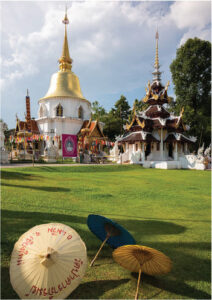
“I Didn’t Even Like Thai Food”: A Fresh Start in...
Name: Connie BoothFrom: Chicago, ILLiving in: Chiang Mai, Thailand A Nike store convinced me to move overseas. In 2020, I’d lost my husband...
Buy Real Estate in the World’s Best Second Cities
◼ Pauline says: It was great to read your real estate index in last month’s issue of IL. You said one of your top 20 places...
We Left US Politics Behind for the Sweet Life in Kandy
Name: Brendan DeckerFrom: Houston, TXLiving in: Kandy, Sri Lanka After a year in Sri Lanka, my wife Lilly and I have no plans...
“I Didn’t Even Like Thai Food”: A Fresh Start in Chiang Mai, Thailand
Name: Connie BoothFrom: Chicago, ILLiving in: Chiang Mai, Thailand A Nike store convinced me to move overseas. In 2020, I’d lost my husband...