


18 min to read
|Jan 2023
French Cuisine and Bonhomie: An Expat’s Love Letter to Lyon

 1
1 Print or download


In France, good food is a fact of life, as reliable as knowing the sun will set against a backdrop of rolled hay and golden tea roses in some gloriously charming village in the south of France.
Live here for a while, and you’ll find your taste buds lulled into a gourmet rhythm that beats around every corner of this country.
Paper-thin layers of croissants, with just the right dusting of buttery sugar under an almond-crusted interior, will send you to the moon and back.
Savory buckwheat galettes (crêpes), which come in as many varieties as French wine appellations, could fill up an entire culinary calendar. Connoisseurs can slide their forks into the warm folds of goat cheese, honey, and toasted walnuts, or a creamy mixture of roasted scallops with sautéed leeks. Pure heaven.
From saddling up for a German-fusion flammkuchen flatbread in Strasbourg, to sampling the tiniest spoonful of pungent rouille sauce alongside a fragrant rock-fish soup in Marseille, there’s a culinary superstar waiting in every French city.
And then there’s Lyon…
A place that not only churns out good food, but also elevates it to a level that gets inside your soul.
On this, my first trip to France’s gastronomic capital, I saw it on the faces of the people I passed on the street… and in the quiet smiles of the chefs peeking out from their kitchens to full dining rooms.
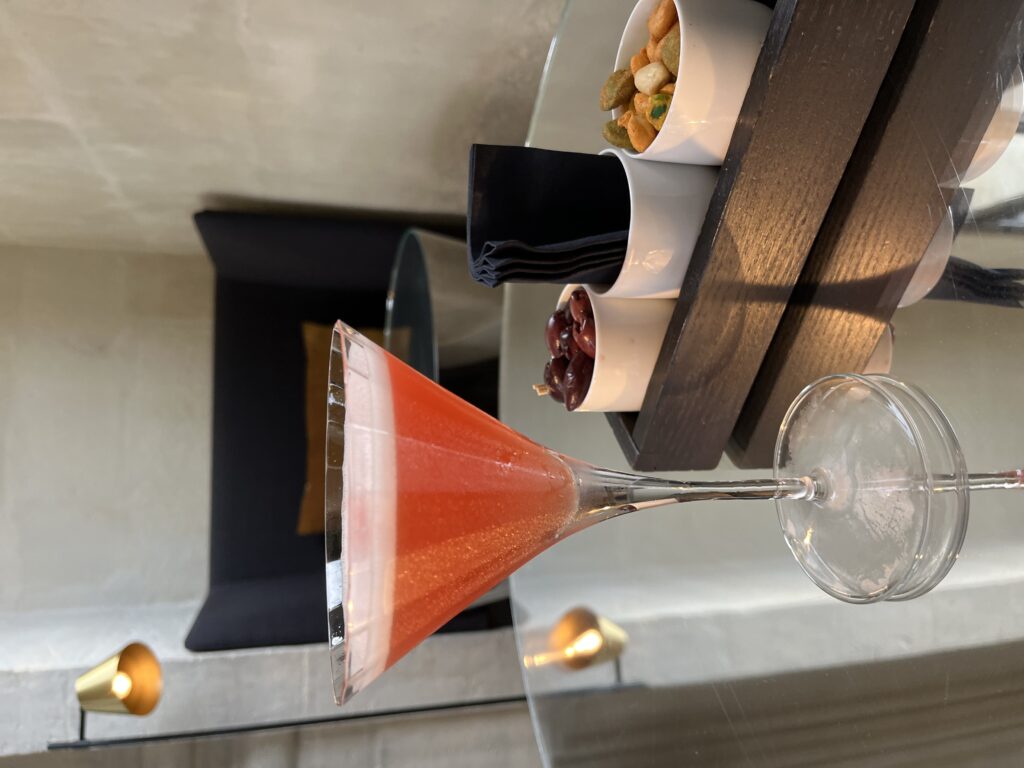
These Lyonnaise are a happy bunch, perhaps the most contented group of French folks I’d ever met. Easy laughter, warm, unhurried conversation, and a sense of simple joy accompanied me from neighborhood to neighborhood, and from hole-in-the-wall café to highbrow cocktail hour at a 5-star hotel.
Yes, Lyon is certainly “all about the food,” but there’s a lot more to this captivatingly beautiful town that’s proud without being snobby, cultured without being pretensious. You’ll discover a surprising bonhomie… a friendliness that defies all the usual stereotypes about French hospitality.
A 5-Star Welcome at a Southern Crossroads
At the convergence of the Saône and Rhône Rivers, the city of Lyon lies at a strategic point on the frontier of southeastern France. Once serving as the capital of Gaul at the height of the Roman Empire, the city is an essential conduit along the north-south transportation axis that cuts through France and extends to other regions around Europe.
The main train station, Part Dieu, is among the best-served rail hubs in all of France, and a key reason many expats have chosen to live and retire in the city.
Much like Paris, Lyon’s urban landscape is divided into neighborhoods called arrondissements—nine in total. With its colorful mix of revitalized artsy districts like the Croix Rousse—once home to the city’s revered silk-weavers—to collections of elegant, stately squares lined with Hermès boutiques and dazzling 19th-century fountains, Lyon serves up a warm mix of bohemian coolness and modern-inspired art de vivre… the French art of living well.
Almost all central Lyon is easily managed on foot, and it’s an urban voyage you won’t soon forget.
I reserved my hotel on the left bank of the Rhône River, which serves as both the financial center and location of the Part Dieu train station. Surrounded by wide, pedestrian-friendly boulevards and sleek French deco shops, the real draw of Lyon’s 3rd arrondissement is the mythic Halles de Lyon Paul Bocuse, a covered food market and homage to the “Pope of French Gastronomy,” Paul Bocuse.
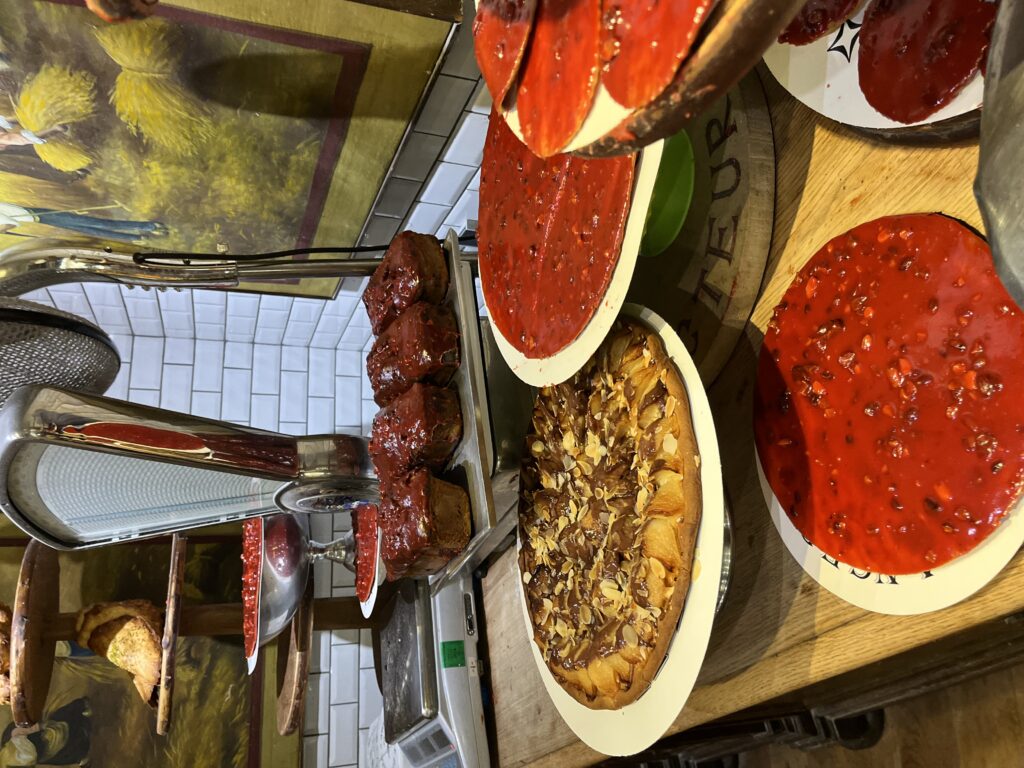
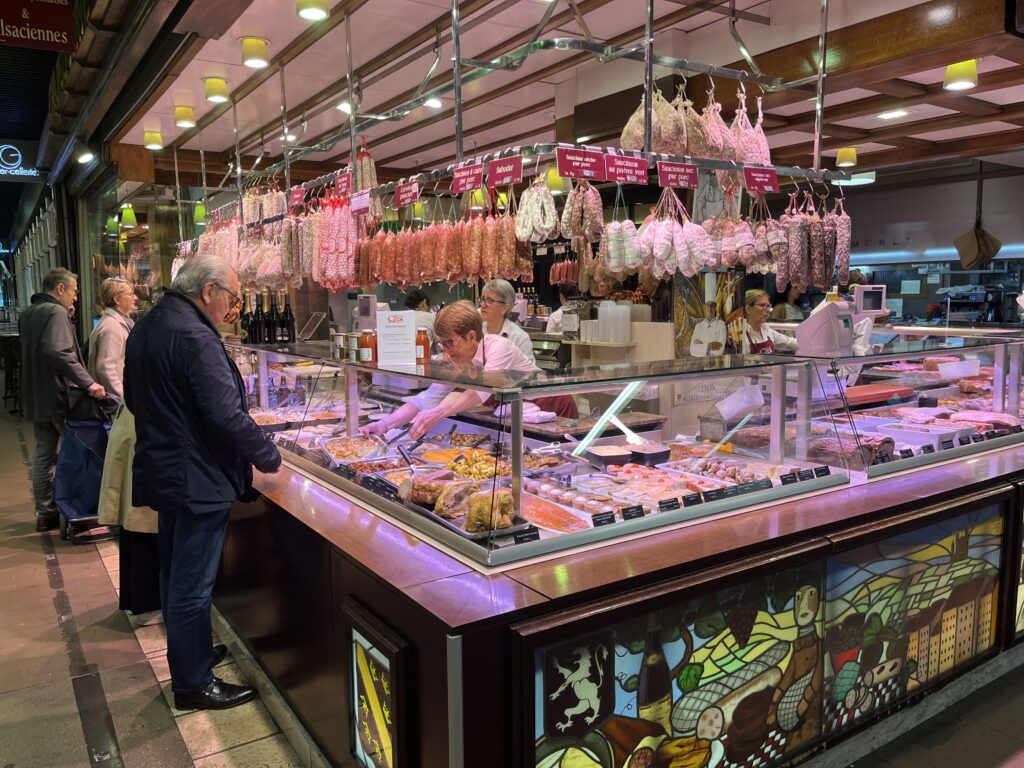
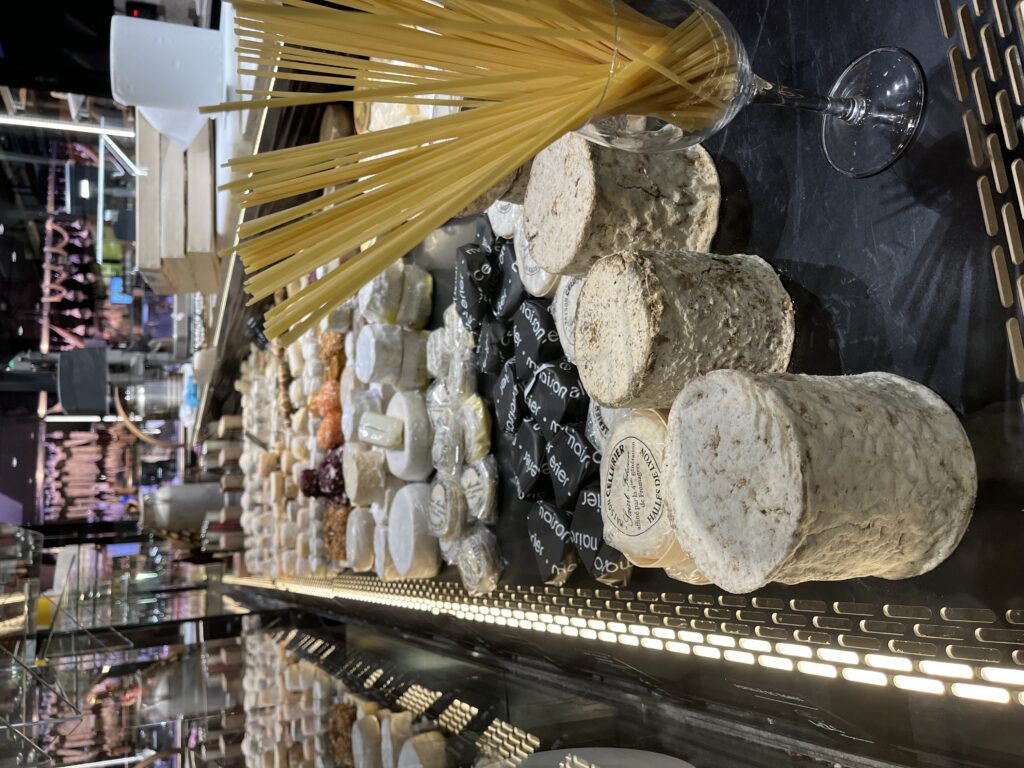
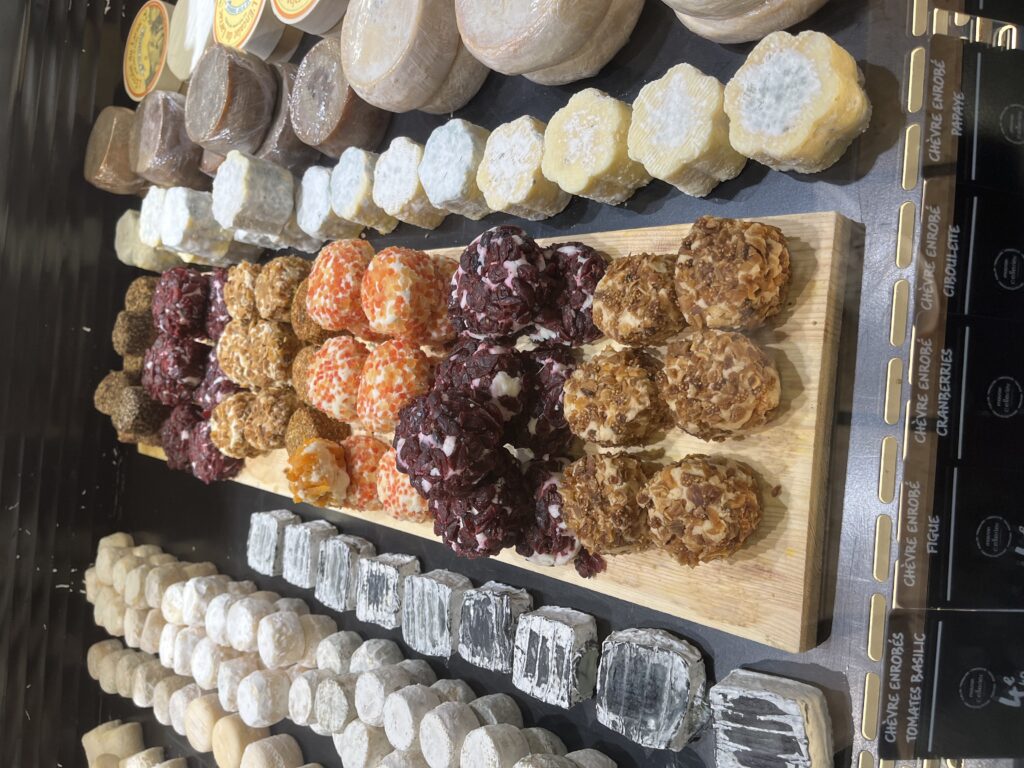
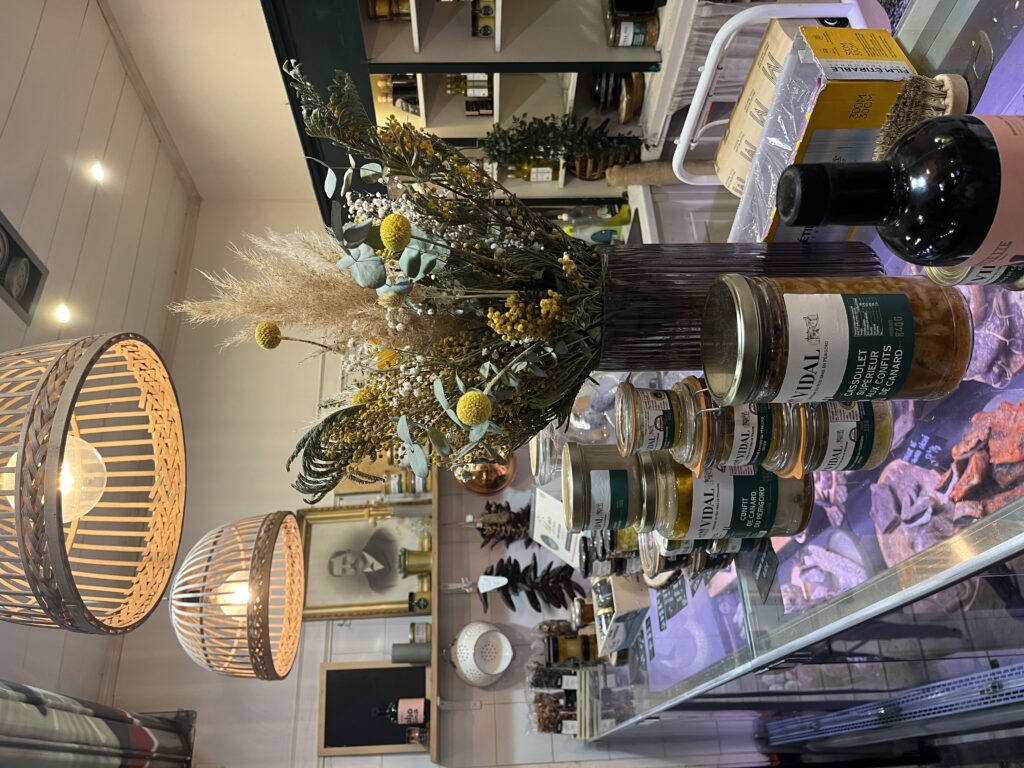
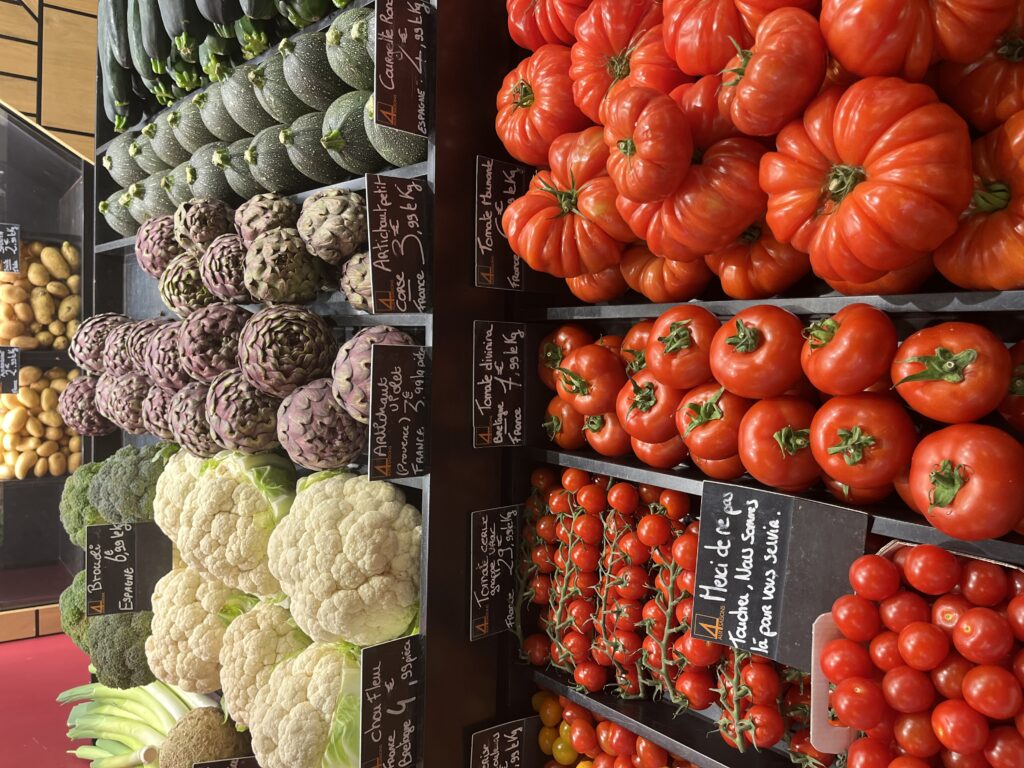
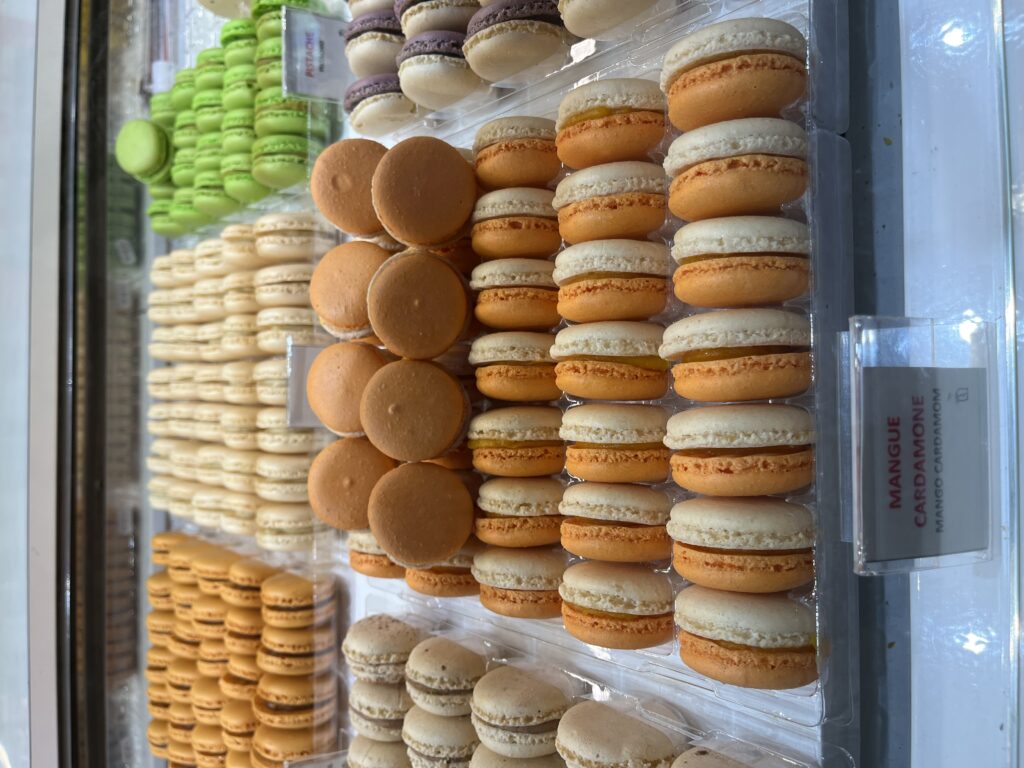
Les Halles boasts a swoon-worthy collection of boulangeries (bakeries), pastry and macaron makers, chocolate confectioners, cheese shops, and Lyonnaise deli cases stacked sky-high with everything from local charcuterie to stuffed lobster tails. It’s quite impossible to leave this market empty-handed.
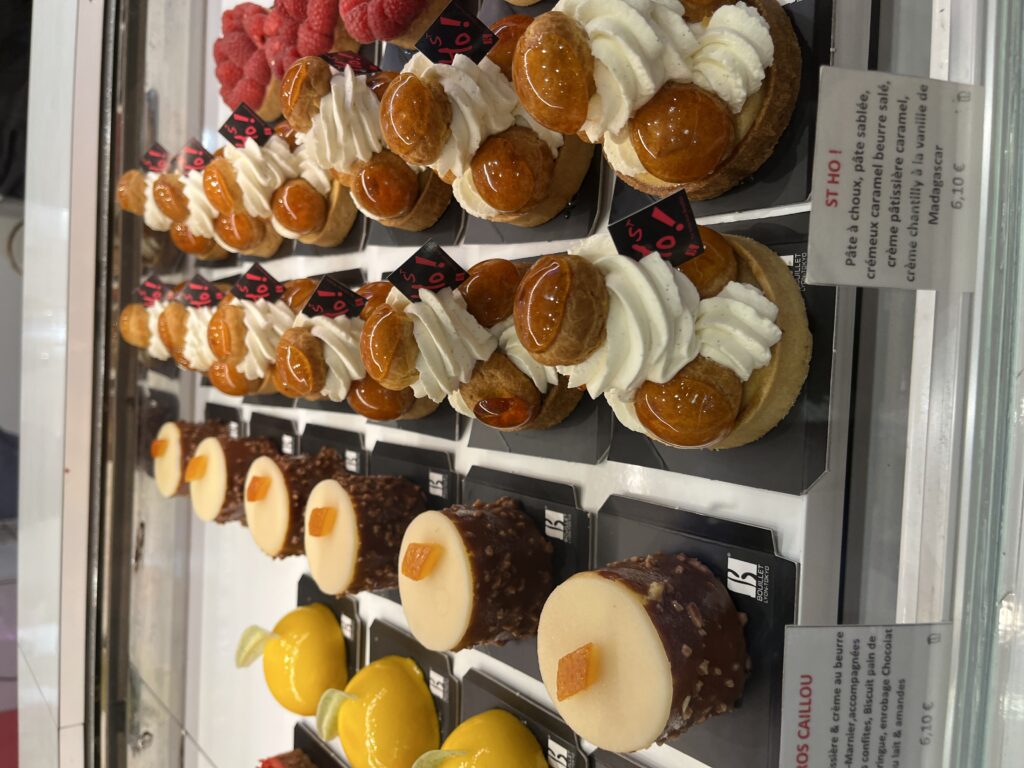
I spent my first morning at Les Halles glued to the windows of Chocolatier Bouillet. Staring at a museum-worthy display of cream-filled works of art, another wide-eyed vacationer next to me remarked, “I wonder if they taste as good as they look.” We both agreed there was certainly only one way to find out.
Sliding eagerly onto a nearby bench, I dipped my fork into Bouillet’s Opaline pastry—a madeleine cake layered with olive oil-infused mousse, puréed kiwi, herbed pesto, and candied kiwi paste. It turns out that olive oil mousse is a thing… and it’s incredibly delicious.
Over the course of my stay in the 3rd, I’d return a total of four times to Les Halles, each time to a new culinary delight, and each time to a warm and caring welcome. From the smiling mademoiselle who carefully wrapped my Saint-Marcellin cheese at Maison Cellerier to the deli cashier from Maison Gast, who guided me on the local salami choices and helped pack my picnic-fare for the afternoon.
No one blinked twice at my heavily accented French, or my garbled attempts to pronounce the food products they’d been selling for years. On one of the busiest travel weekends of the year in France, it was an uplifting—and inspiring—breath of fresh air.
WHAT TO KNOW BEFORE YOU GO
Planning a trip to Lyon is easy, as the city is so well-organized. With a highly efficient rail system that connects you to other cities in France, one-way tickets from Paris start at €25 ($27) if you book in advance.
Delta, Air France, and American Airlines offer several direct flights from New York (JFK) each month and connecting flights to other cities around the U.S. Non-stop flights around Europe from the Lyon airport are plentiful. Destinations include London, Brussels, Rome, Dublin, Mykonos, and Amsterdam, to name but a few.
To sketch out an itinerary, I recommend starting with the Lyon tourism website. Offering a large selection of themed-tours, you can pre-book and pay for your tours online, and get QR-code confirmations sent to your phone.
While most of the historic center is accessible on foot, especially the Presqu’île to Vieux Lyon, it’s wise to book a tramway tour of the Croix Rousse (the former silk workers neighborhood) which sits on a series of hills that would give San Francisco a run for its money.
Likewise, consider taking the funicular tram to visit the Roman ruins and amphitheater of Lugdunum. It’s a spectacular site sitting high on Fourvière hill, with unparalled views of ochre and honey-colored Lyon crisscrossed by the Saône and the Rhône. The nearby Fourvière Basilica is also a must-see monument, although it’s best reached by bus for those with mobility issues.
Boat tours are another inspiring way to experience the city. Traveling along the Saône River, I got a unique view of the Confluence neighborhood—a sleek and funky contemporary district in the 2nd arrondissement. Spend the afternoon at the Confluences Art Museum and take the metro, bus, or even cycle to your next destination. Vélo’v is the city’s convenient bike rental service, with single rides priced at €1.80 ($1.90).
A full-access bike pass is among the extras included in the Lyon City Card. City cards can be purchased for up to four-day stays and provide access to 23 museums and galleries, unlimited bus, metro, and funicular rides, one boat tour on the Saône River, shopping discounts, and one select guided-tour with the tourist office. One-day passes go for €23.90 ($25.70), and four-day passes come in at €53.90 ($58) per person.
Given its gourmet reputation, restaurant reservations in Lyon are a must… allow at least two weeks in advance to be on the safe side. Excellent bouchons (bistros) exist in every neighborhood, with Bouchon Sully, Bouchon Tupin, and Bouchon Daniel et Denise coming in as tried and true favorites. Several bouchons are closed on the weekends, and, due to their popularity, many send follow-up emails or text messages asking for an additional confirmation on the day of your meal.
Outside of the bouchon circuit, the selection of exceptional restaurants in Lyon could fill its own guidebook. At Le Grand Refectoire, in the courtyard of the 5-star Hotel Dieu, I had a sublime dinner while watching the chefs in action through the glass show kitchen. Weekday lunch menus—starter, main dish, and dessert—are €26 ($28).
For a taste of star-power dining on a budget, try Bistro Tetedoie. It’s a wonderful start, or end, to an afternoon on Fourvière Hill, and the affordable answer to Chef Christian Tetedoie’s Michelin-star restaurant located on the upper floor. My poached egg starter cooked itself, at my table, under a glass-encased flame… magiccal. A three-course set lunch at the bistro is €27 ($29).
Between Two Rivers: A Low-Key Answer to Paris
A short walk over the sweeping Rhône River via romantic Lafayette Bridge took me to Lyon’s Presqu’île, the epicenter for the city’s social and cultural life.
A 1.5-mile-wide peninsula between the Saône and the Rhône River, loaded with majestic squares like Bellecour, historic theater venues like Théâtre des Célestins, and a multi-faceted shopping and gourmet dining complex called Hotel Dieu, an afternoon spent on the Presqu’île feels like a distilled, low-key version of Paris.
Yes, Louis Vuitton, and Hermés are there, but so are pedestrian gems like Rue Mercière. The street, one of the 2nd arrondisement’s main culinary arteries, is filled with checkerboard-cloth bistros and hot pot takeaways and was once the center of the printing industry—which, along with silk-weaving and banking, cemented Lyon’s commercial prosperity.
Around the corner, you’ll find sumptuous Place des Jacobins, with its majestic fountain sculpted in 1885. Considered one of the most beautiful squares in the city, it falls under the UNESCO World Heritage status, awarded to 10% of the total surface of the city, including a large part of the Presqu’île and Vieux Lyon—Lyon’s Renaissance neighborhood, whose burnt yellow, orange, and brick-red buildings were painted to resemble those of an Italian town.
Double-back towards the Rhône, and you’ll hit Place de la République and its trendy shopping arcade, or head to a buvette along either river for an early-evening aperitif. Paris has nothing on a cool mojito enjoyed next to the calming rhythms of the Saône.
Diversity of Food, Diversity of People
After several days of city exploration, I caught up with Beverly and Tim Christensen, two American expats who moved to Lyon in 2022. Beverly, a former architect, and Tim, a retired university professor, traveled extensively throughout the U.S., last residing in downtown Los Angeles before making the leap abroad.
After a series of scouting trips in France—including Annecy, Grenoble, Chambéry, Montpellier, Avignon, and a brief flirtation with Italy—the couple settled in an apartment on the Presqu’île.
When I asked why France won out over bella Italia, Tim told me France’s excellent healthcare system played a large part in their decision-making.
“It was so easy to get into [the healthcare system] and so easy to use. They’ve been very nice to us, very open and willing to take us into their system. Even Medicare—which I was on back in the States—didn’t cover nearly as much and wasn’t nearly as affordable,” he says.
Everyone has the right to French healthcare after living here for three months, with no age restrictions or preexisting condition limitations. Doctor’s visits are $29 and reimbursed at 70%… so $9 out of pocket. Hospital stays are around $110 a day, and reimbursed at 80% the first month, and then at a 100% for each additional month. Treatment for long-term illnesses, such as cancer, heart disease, Alzheimer’s, and Parkinson’s, are 100% covered under the French healthcare system.
“
Beverly also touched on something that I had experienced in Lyon from day one: the friendliness of the people. “In general, everyone has been incredibly nice… and our French isn’t perfect.”
“Lyon just seemed to speak to us,” says Tim, “it really was love at first sight.”
Also keen on the food culture, Tim was looking for a place to eat well and buy quality products to prepare. “We love the diversity of food,” he says. “And the diversity of food comes with a diversity of people. Everyone here comes to explore the food and share it with others.”
Like many of the other expats I talked to, the ease with which you can get around also ranked high in the couple’s appreciation of Lyon. “The transportation is fabulous,” says Beverly. “You can take the subway, trams, funicular… and buses. They get you where you want to go, and generally run on time.”
“Lyon is a great centralized location for visiting other places in Europe,” says Tim. “You can go on train rides to Munich, Frankfurt, Geneva, and Barcelona.”
As far as cost of living goes, the couple felt that it was much cheaper than living in Los Angeles, but comparable in price to other U.S. cities like Minneapolis, where the couple spent time prior to their Lyon move. They spend more on housing in Lyon than Minneapolis, but a lot less on food. “And the food quality is so much better,” Beverly is quick to add.
Having spoken to other expats, I’d say a couple could expect to spend $2,900 to $3,500 per month here. Rentals outside of the city center are several hundred dollars less a month than the city center, offering one of the biggest opportunities to save (see below). Healthcare was also mentioned as a top savings incentive for France in general.
Beverly and Tim obtained a long-stay, 12-month visa in order to be able to live full-time in France. The application process takes place in the U.S. or Canada, and is surprisingly easy. The long-stay visa renews every 12 months and continues to renew for five years total, at which time expats can seek French citizenship if they so choose.
With a Little Help from My Friends

©GREGORY_DUBUS/iSTOCK
As a popular and well-connected city, with all the bells and whistles to attract not only retirees but also expats seeking to work in the area, Lyon is a very desirable place to live.
Although in general prices aren’t as high as in Paris, rental and purchasing costs are higher than France’s average. A two-bedroom, 800-square-foot furnished apartment in Lyon’s center starts at €1,330 a month ($1,430).
Apartments of the same size for purchase begin at around €320,000 ($344,112), and they go up from there, depending on the property and the popularity of the neighborhood.
As is true all around France, looking for housing outside of the historic center—in this case the Presqu’île and Vieux Lyon—will help reduce costs.
An excellent resource for tips on the local property market (and a great way to make connections in town) is the American Club of Lyon. I was able to catch up with the club’s president, Mark Gallops, a retiree from New York who spoke enthusiastically about the organization’s mission.
“We’re a community of about 140 families—around 200 adults and 70 children. The club is a combination of Americans living in Lyon for work, study, raising families, and in retirement… as well as French natives who have lived, worked, or met their partners in the U.S.”
From happy hours to Cinco de Mayo and Fourth of July parties, weekly coffee chats, and an English-French language exchange, the American Club has something for everyone.
When I told her I was attanding one of the coffee chats, Liz—an American retiree from Albuquerque—remarked, “You’ll find more Americans than you’ll know what to do with!”
And she was right. There were about 14 of us gathered on Tuesday morning at Perko Café in the Croix Rousse neighborhood. Many had moved for retirement, some were part-timers who came to the city for three months of the year, and one father had moved with young children and set up a business.
Most felt that ease of transportation, the city’s walkability, the joy of not needing a car (and not having the expense of one), the friendliness of the people—and of course the food—were the top reasons to move to Lyon.
For Philippe, Lyon won out over Bordeaux, thanks to the train service: “You can go to so many places and that’s just in Western Europe.”
Several others touched on the vibrant art and music scene. Jim moved with his wife, a musician, so she could be near the local orchestra.
When asked what drawbacks he’d experienced living in the city (besides the ups and downs of learning French) he was hard-pressed to find any…
“There’s nothing I don’t like about Lyon,” he says. “I wake up every day and pinch myself that I’m here.”
THE CULINARY EMBRACE OF A LYONNAISE BOUCHON
The story of Lyon’s mythic food culture dates to the 18th century, with the emergence of les Mères Lyonnaises (mothers of Lyon).
Les Mères were female cooks from modest means who worked as hired help in homes around the city, cooking principally for bourgeoisie families until they were let go during the First World War.
Subsequently, they opened their own restaurants around the city, offering simple but refined dishes. Often cooking for local silkweavers, nicknamed Canuts, many of their creations were adapted to meet the limited budgets of this burgeoning population.
One of most emblematic, if confusing, dishes from this period is the Cervelle de Canut, which translates to “silk-weaver’s brain.” Workers of the time couldn’t afford sheep’s brain—a gut-sticking, protein-rich dish—on their meager wages, so it’s thought that this dessert, containing hearty fromage blanc, became their go-to substitute.
The culinary stamp of the Mères can still be seen in modern-day Lyonnaise cooking, which transforms lesser cuts of meat into savory sausages, rich pâtés, and the endless charcuterie platters on display at Les Halles Bocuse. (Paul Bocuse, France’s most famous chef, was trained himself by La Mère Brazier, the first woman to receive 3 Michelin stars in 1933.)
Many bouchons—the name given to the restaurants cooking in the traditional style of the Mères Lyonnaises—have added modern touches to their Old World specialties.
Examples of revisited classics include pâté en croûte—a thick slab of savory pastry dough stuffed with seasoned meats and upgraded with fruit chutney and pickled vegetables. Quenelles—oversized, moist dumplings prepared with Pike fish—are jazzed up with everything from sun-dried tomatoes to olives from Nyons.
Although typical Lyonnaise dishes are the heart and soul of any bouchon, chefs leave ample space to let their creativity reign free, as I discovered at Bouchon Tupin, a highly rated restaurant on Lyon’s Presqu’île.
Having booked the second lunch service at 1:30 pm, a group of around 20 shuffled slowly into the café-sized dining room. Like walking into a warm, culinary hug, it was all there… French hospitality without the pomp and circumstance, simple food elevated to extraordinary heights.
Art Deco lamps with beaded fringe dangled above swirled marble tabletops, their perfectly mismatched bistro chairs pairing effortlessly with the rich tones of the burgundy granite. Above a dark mahogany trim, the dining room was wallpapered with black and white newspaper fragments dotted with vintage French signage.
The head waiter greeted us as if we were the first customers he’d ever served.
I filed in shoulder-to-shoulder with a slight French woman in her 70s, who turned to me, surprised, and remarked, “Je n’ai jamais vu une chose pareille.” (I’ve never seen anything like this before.) I nodded slowly… this wasn’t just lunch, this was a full-body experience.
Bouchon Tupin’s welcome was bested only by the quality of its food.
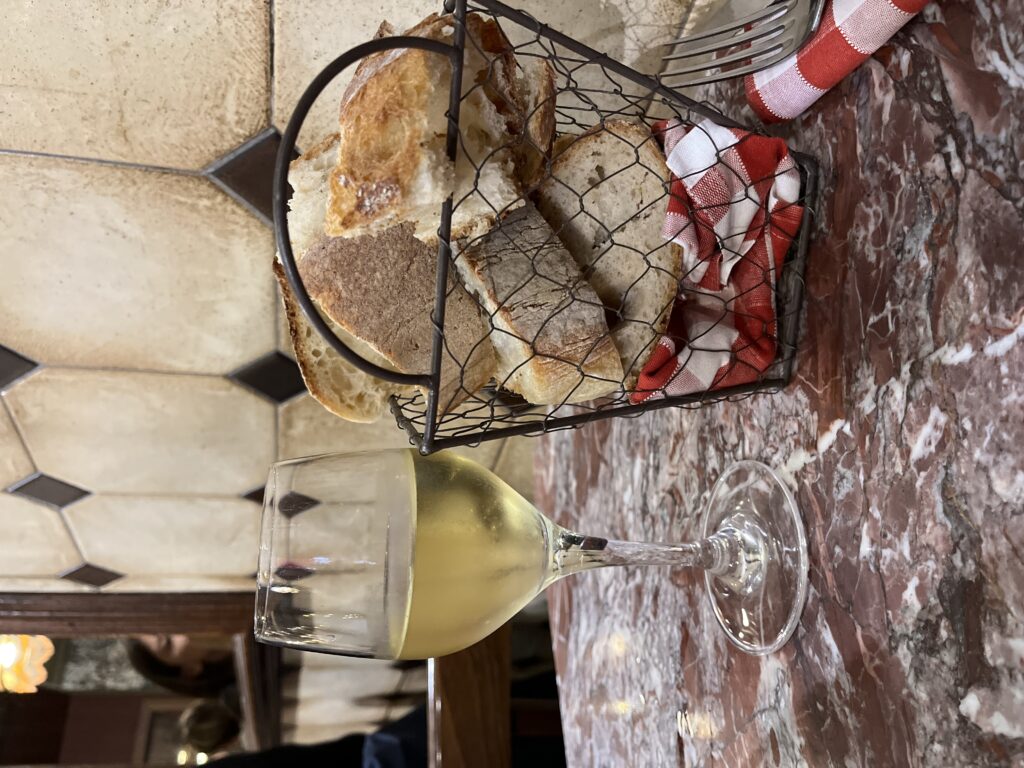
My starter of sea bass ceviche topped with roasted corn and fresh herbs came with a lemon-ginger vinaigrette, and enough crusty French bread to feed a small family. The main dish, fish of the day, was cooked to perfection in a combava (Kaffir lime) and coconut-milk lobster sauce.
It all ended with a showstopper dessert: a thick slab of chocolate mousse sprinkled with roasted buckwheat and stuffed with dark chocolate chunks, served with a lemon madeleine cake.
At €25.50 ($28) for a three-course lunch, Bouchon Tupin was not only a feast for the seasons, but an absolute steal.
VIDEO: Views of Lyon

Also in This Issue
Curiosities, Quirky Tidbits, Travel Hacks
Each month, we bring you recommendations, odd notes, and useful tools to help you better navigate an interesting world. EAT,...
Rental Strategies & Multi-Use Properties: Your Questions Answered
◼ Geoffrey says: Hi Ronan, you write a lot about different rental strategies, be it renting long- or short-term, or renting just...
We Swapped Frenetic Cali for Peaceful Greece
“My Stress Level Here is Nothing” Names: Griselda Valencia & David DaoudFrom: San Diego, CaliforniaLiving in: Corfu, Greece “We explore, we travel. In...
Curiosities, Quirky Tidbits, Travel Hacks
Each month, we bring you recommendations, odd notes, and useful tools to help you better navigate an interesting world. EAT,...
Rental Strategies & Multi-Use Properties: Your Questions Answered
◼ Geoffrey says: Hi Ronan, you write a lot about different rental strategies, be it renting long- or short-term, or renting just...
We Swapped Frenetic Cali for Peaceful Greece
“My Stress Level Here is Nothing” Names: Griselda Valencia & David DaoudFrom: San Diego, CaliforniaLiving in: Corfu, Greece “We explore, we travel. In...