



7 min to read
|Apr 2025
Japan’s Real Estate Market Is Wide Open—Here’s How to Take Advantage
 1
1 Print or download


© ONURDONGEL/iSTOCK
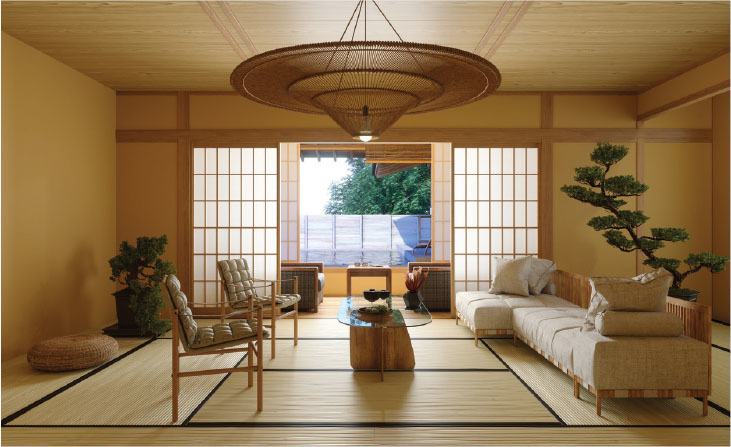
Your dream home could be in Japan… and cost next to nothing.
Tucked away in the Japanese countryside, thousands of empty homes are waiting for new owners—some are selling for just a few thousand dollars, others are being given away.
With a declining population, a weak yen, and an increasing number of municipalities eager to welcome new residents, Japan is offering what I consider one of the world’s best real estate opportunities.
If you’re looking to relocate, invest, or simply own a peaceful getaway, now might be the best time to make a move. Here’s what you need to know about finding—and affording—your own place in Japan.
Why So Many Empty Houses?
Japan has millions of vacant homes—about nine million to be exact. That’s nearly 14% of all houses in the country, and the number keeps climbing. Why? The population is shrinking. The birth rate is low, and younger generations are moving to big cities, leaving behind empty homes in rural areas.
Many elderly homeowners find it too difficult to maintain their properties, so they downsize or move into assisted living. Their children, already settled in modern apartments near work and entertainment, often don’t want to deal with old family homes in the countryside. And since property values don’t normally appreciate in Japan, many of these homes just sit there, slowly falling apart.
The good news? That means there are some amazing deals for buyers willing to put in a little work.
My Property Buying Experience
After semi-retiring from a university teaching job and leaving northern Japan for a warmer climate, my wife and I planned to rent a new home. But we quickly discovered that our rental options were severely limited because we had a dog. We also realized we could own a home and save money if we chose carefully.
We examined many cheap, unoccupied homes for sale, but since my house remodeling skills are limited—and I have a neck injury—we searched for something in better shape. Eventually, we bought a seashore condominium in a quiet suburb outside Nagoya, Japan’s fourth-largest city, for about $100,000. We then spent less than $10,000 on renovations.
Now we kayak and swim in the sea during summers, watch cormorants, ospreys, and seagulls from our spacious balconies, enjoy sunsets nearly every evening, and fall asleep to the sound of the waves. Visiting friends from New York and Europe said our place would cost at least $1 million in their neighborhoods.
Bernie and Hiromi: A Free House in the Countryside
English expat Bernie Goldman and his Japanese wife Hiromi, lived in Tokyo but wanted to move somewhere with more nature. While Bernie was away in England, Hiromi visited the small farming town of Kamogawa, where she met an elderly Japanese couple struggling to keep their unoccupied house from falling apart during storms. In exchange for taking care of the property, they offered to let Bernie and Hiromi live there.
When Bernie first saw the house—lacking a modern toilet system, proper insulation, and even window screens—he balked, telling his wife, “I don’t do DIY.” But the fresh air, rolling green hills, birdlife, and welcoming neighbors changed his mind. Neighbors and YouTube videos taught him how to garden and make repairs. “The first year was rough,” Bernie admits. “We had to battle spiders, mosquitoes, and the cold—but after a while, we got used to it and figured things out.”
Now, he loves his home and the organic garden, fruit trees, and chickens that provide fresh eggs. “There is a continuous flow of food going around,” he explains. “Eggs from my chickens are my currency.”
“Crime is almost nonexistent,” he proudly says. “I never lock doors and I love never having to carry keys.” Neighbors assist each other. One architect neighbor is helping Bernie repair an old barn for free, and Bernie and others share a small work truck.
After the Goldmans showed their commitment to the house and community, the original owners decided to give them the house. Bernie and Hiromi had to pay only transfer and lawyer fees, totaling approximately $2,500. Remodeling the home was inexpensive because they could use barn doors, window frames, and planks from nearby abandoned homes. After a storm destroyed a neighbor’s unoccupied house, the owner told others to take whatever they needed. Bernie estimates that over ten years they have spent less than $6,300 on various household goods. “It is a joy to use recycled materials,” he says.
Shem and Mari: Turning an Old Storehouse Into a Guesthouse
Shem Booth-Spain and his Japanese wife, Mari, were living in London when they decided they wanted a lifestyle change for themselves and their two daughters. They envisioned a life closer to nature, where they could grow their own food, reduce their ecological footprint, and have more space. A friend recommended the town of Toei in Aichi Prefecture, so they started researching.
They found a two-story house on a mountainside with about five acres of woods, a well, orchards, a vegetable garden, and a storehouse—all for just $25,000. “The owner was an old gentleman who just wanted to leave,” Shem recalls. “Maintaining the house was too much for him.” He moved away, leaving behind a treasure trove of tools, furniture, bedding, and kitchenware—some useful, some junk, but all part of the deal.
They spent about $9,000 on materials and labor, slowly turning the place into their dream home. AI played a surprising role—Shem used it to help design a Zen-style garden and calculate how much concrete and gravel he needed. “With almost no experience I built a gorgeous, inexpensive, ancient-Japanese-style garden,” he says.
Evan and Dani: From Tourists to Business Owners
Evan and Dani Benton had always dreamed of living in Japan. While still in the US, they started browsing Japanese real estate listings and narrowed their search to areas they liked. When they arrived on a 90-day tourist visa, they found a house on Omishima Island that had been vacant for ten years. The price? Just $7,500.
“The place needed work, but it had potential,” Evan recalls. “It was surrounded by nature and the community was welcoming.” Including fees and renovations, they spent about $38,000 in total. They applied for a Japanese Startup Business Visa to gain residency rights and develop their first business—renting out that house. Using Airbnb and similar platforms, they advertised Benton Homestead, and it wasn’t long before they started making a return on their investment.
After securing residency—four months after arriving in Japan as tourists—they bought a second house for themselves. They’ve since expanded into farming, beekeeping, and offering advice to other foreigners wanting to buy homes in Japan. They even started a YouTube channel and Facebook page to document their journey, attracting a growing audience of people curious about Japan’s real estate market.
Cautionary Tales
Not every deal is a dream come true. Chani, an Australian expat, bought a long-vacant property in Wakayama City and skipped the home inspection to save money. Big mistake. When she turned on the utilities, she discovered leaks, plumbing issues, and termite damage. It blew her budget.
Unlike in the US, Japanese home sellers aren’t required to disclose problems like mold, termites, or bad plumbing. That’s why it’s important to budget extra for unexpected repairs. Even with the added expenses, though, Chani still paid far less for her home than she would have back in Australia.
It’s Entirely Possible…
Japan’s currency has lost value in recent years. Back in 2005, one dollar got you 110 yen. Today, it’s around 149 yen per dollar. That means anyone buying in US dollars can get a lot more for their money.
This real estate market is full of opportunities, but it’s not for everyone. If you’re willing to put in the effort, love the idea of living in the countryside, and want an affordable home in a beautiful place, seize the opportunity. Just do your research, prepare for surprises, and connect with other expats who’ve been through the process.

Also in This Issue
Portugal’s Undervalued Coast… and Is it Time to Buy in...
◼Alan U. asks: Hello Ronan, I’m interested in buying an investment property in the Algarve region of Portugal, with hopes of...
Upgrade Your Lifestyle and Discover Pura Vida in Magical Costa...
A Gentle, More Fulfilling, Fun Life Awaits In the Friendliest Country on Earth Fast Track Costa Rica Conference May 24-26,...
Forests, Fortresses, and Spies: Unforgettable Day Trips From London
What’s the connection between a medieval castle, an ancient forest, and a little-known historic site where WWII secret codes were...
Portugal’s Undervalued Coast… and Is it Time to Buy in Argentina?
◼Alan U. asks: Hello Ronan, I’m interested in buying an investment property in the Algarve region of Portugal, with hopes of...
Upgrade Your Lifestyle and Discover Pura Vida in Magical Costa Rica
A Gentle, More Fulfilling, Fun Life Awaits In the Friendliest Country on Earth Fast Track Costa Rica Conference May 24-26,...
Forests, Fortresses, and Spies: Unforgettable Day Trips From London
What’s the connection between a medieval castle, an ancient forest, and a little-known historic site where WWII secret codes were...