



6 min to read
|Jan 2023
Malaysia Puts Out the Welcome Mat for Digital Nomads
 1
1 Print or download


©iSTOCK
Malaysia is already home to an estimated 30,000 Americans, drawn by the country’s low cost of living and tropical lifestyle. And now, with its new digital nomad visa, Malaysia’s paving the way for more.
Digital nomad visas give foreigners who can work from anywhere an extended residence permit… as long as they don’t offer services to local residents. Tax concessions sweeten the deal.
Countries have a good reason for offering this boon, as digital nomads bring money—and connections—to the local economy.
Late in 2022, Malaysia announced a new year-long digital nomad visa, officially known as the DE Rantau Nomad Pass. It’s open to applicants earning at least $24,000 a year… much lower than comparable programs in Europe.
Who Qualifies for the DE Rantau Nomad Pass?
Officially, the program is open to digital nomads of any profession or specialty. But the program is managed by the Malaysia Digital Economy Corporation (MDEC), whose mandate is to boost the country’s tech sector.
If you’re not a specialist in programming or a similar high-tech skill, don’t worry. The visa claims to be open to anyone involved in digital marketing, creative content (like writing), or content delivery. Basically, if you can work from your laptop, it’s worth applying.
To apply for the visa, you need to provide the following, all in English:
- A passport with 14 months’ validity
- A passport photo
- Latest three months’ bank statements and a yearly income statement showing minimum earnings of $24,000
- Active project contract (for freelancers or independent contractors) or active employment contract from a non-Malaysian company
- Latest resumé and educational certificates
- A police report from your country of current residence or a notarized Malaysian statutory declaration form
- A declaration that you will respect the conditions of your visa and Malaysian laws
- Proof of health insurance in Malaysia (after approval)
Application fees are a little over $200, with a 75% refund if you’re unsuccessful. Once approved, the applicant can stay in Malaysia for up to 12 months, with the option to extend the visa for another 12.
Plus, unlike most digital nomad programs, applicants can work for Malaysian companies and clients. Spouses and children are welcome, too.
The program also offers access to digital networking “hubs”—co-working spaces—and specialized accommodation in areas close to Malaysian tech industries. The government has also negotiated with local businesses to provide discounts on many goods and services, including tourist packages, too.
And Malaysia doesn’t tax foreign source income, whether from current employment or via pension. That makes it doubly attractive when compared to many European programs, where local tax obligations are triggered after six months’ residence.
A Longtime Expat Haven
Malaysia is uniquely well-suited for digital nomads and retirees, as English is almost universally spoken in this former British colony. The population is ethnically diverse, too, with large populations of Chinese and Indian descendants in addition to local Malays. And despite being an officially Islamic country, there are no restrictions on the religious activities of non-Muslims.
Meanwhile the capital, Kuala Lumpur, was ranked the best city in the world for expats in 2021.
It’s often compared favorably to Singapore, with excellent public transport, innovative urban design, and towering skyscrapers, plus an efficient airport with connections all over the globe. Although there aren’t any direct flights to the US, there are easy connections via Middle Eastern and Far Eastern hubs like Doha and Hong Kong.
“
And those looking to cool off from the hot, humid climate can head to the central mountain chain that runs from north to south. (Read about the Cameron Highlands.) Thanks to the elevation, towns in the interior tend to be cooler… and protected from the monsoons that pelt the eastern coastal region during the rainy season.
A couple can easily live well here on a budget of $2,500 per month… and still afford membership fees for the famed country and sports clubs.
What to Know Before You Go
Malaysia isn’t without its challenges, though. Malaysian law restricts property ownership by foreigners. Some parts of the country are off-limits entirely, and in others there’s a minimum purchase price for foreign buyers. In Kuala Lumpur, for example, you’ll need to spend at least $212,000 on residential property.
It’s also difficult for foreigners to open a local bank account… though the country’s advanced digital infrastructure means that digital payment methods are accepted almost everywhere, and foreign credit and debit cards work just fine.
Malaysia isn’t friendly to all lifestyles, either. While religious diversity might be respected, the country certainly isn’t welcoming to the LGBTQ+ community. And though alcohol consumption is permitted, drug use attracts severe sentences. So weigh the pros and cons carefully… and opt for more liberal locales, like the island of Penang.
“
The digital nomad visa is still in the early stages, and the government hasn’t yet released statistics for its first year. But initial reports suggest it’s being operated effectively and efficiently, with approval periods of a month or less.
Another bonus: the country allows prospective digital nomads to stay there for up to six months, pending the outcome of their application.
Between its tropical climate, excellent healthcare, and low cost of living, I’ll be keeping a close eye on Malaysia in upcoming columns…
UPDATE: MALAYSIA MY SECOND HOME VISA

©F11PHOTO/iSTOCK
The DE Rantau Nomad Pass isn’t Malaysia’s first attempt at a long-term residency visa. It’s long offered an independent means visa, known as Malaysia My Second Home (MM2H).
Launched in 2002, the scheme allows 10-year residency in the country for applicants meeting minimum net worth and monthly income requirements. More than 40,000 MM2H visas have been issued, mainly to applicants from China and Japan… and a considerable number of Europeans and North Americans.
In recent years, however, MM2H visas issued have dropped by 90% as the government has increased the financial requirements.
Currently, you need to prove liquid financial assets of around $106,000 (for those under 50) or $63,500 (for those over 50), as well as a minimum monthly income of $8,500.
Given the decline of applicants, the government is now vowing to roll back these restrictions.
The current MM2H visa doesn’t allow local employment or business and is mainly used by foreign retirees. Foreign source income, including pension, isn’t taxable… and there’s a special tax incentive for bringing household goods into the country.

Ted Baumann is IL’s Global Diversification Expert, focused on strategies to expand your investments, lower your taxes, and preserve your wealth overseas.

Also in This Issue
Curiosities, Quirky Tidbits, Travel Hacks
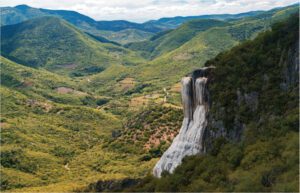
EXPERIENCES Visit One of the World’s Only Petrified Waterfalls For thousands of years, water has percolated through the porous limestone...

Top Real Estate Markets with Comfortable, Spring-like Climates: Your Questions...
◼ Dave says: We’re RETA members and have purchased a condo in Samsara in Tulum. Although we are very happy and excited about spending...

A $1 Million Medical Bill and a Joke Led Us...
Name: JP StonestreetFrom: Denver, COLiving in: Cuenca, Ecuador It was chilly and raining as my wife Amelia and I hailed a cab outside...
Curiosities, Quirky Tidbits, Travel Hacks
EXPERIENCES Visit One of the World’s Only Petrified Waterfalls For thousands of years, water has percolated through the porous limestone...
Top Real Estate Markets with Comfortable, Spring-like Climates: Your Questions Answered
◼ Dave says: We’re RETA members and have purchased a condo in Samsara in Tulum. Although we are very happy and excited about spending...
A $1 Million Medical Bill and a Joke Led Us to Ecuador
Name: JP StonestreetFrom: Denver, COLiving in: Cuenca, Ecuador It was chilly and raining as my wife Amelia and I hailed a cab outside...