


20 min to read
|Apr 2025
The Most Livable Island in Southeast Asia

 1
1 Print or download


“The food. The people. The water.”
Jason Issacs, in a recent interview with The Standard, sums up the allure of Koh Samui well. Issacs spent seven months on the Thai island during the filming of HBO’s The White Lotus.
Koh Samui’s delectable local cuisine, warm hospitality, and majestic natural beauty have made it a go-to destination for film crews, the hashtag yoga set, and digital nomads worldwide.
I’ve visited countless beautiful islands in Southeast Asia. But once the novelty wears off, I start finding little things that prevent me from considering most of them for a long-term stay. It’s too hot. It’s too small. It’s too expensive. I’m afraid I’ll get bored. There may be practical reasons, like not enough shopping, or food choices… or limited access to good healthcare.
Yet Koh Samui, in the Gulf of Thailand, quashes all my objections. It’s not just a picture postcard, it’s a fascinating wonderland of Southern Thai culture and a diverse yet close-knit community of expats and locals. The laidback and surprisingly affordable lifestyle seems almost too good to be true. So I dove deep for hidden warts… and came away nearly empty-handed.
Creative Inspiration Unlocked
The truth is, Koh Samui is tailor-made for retirees, nomads, and freedom lovers from anywhere around the globe.
What I appreciate about Samui is the many social activities and opportunities for community involvement. You can join social or sports clubs, get involved in service organizations like Rotary, attend concerts and festivals, and participate in a dozen different sporting events. It’s easy to be a social butterfly if that’s your thing.
Alternatively, you can retreat to the quieter areas of the island for peace and solitude. For instance, I spent two months in a bungalow on the island’s rugged west coast in Taling Ngam, where I focused on writing the second half of my first novel. It was the perfect atmosphere for inspiring creativity… I watched intense sunsets from my perch high up on the rocky cliffs… and my built-in alarm clock was a symphony of birds inhabiting the verdant jungle. I enjoyed my afternoon coffee ritual every day without the intrusion of a single mechanized hum.
A unique characteristic of the expat community in Samui is the inclusiveness of all ages in group activities. Early one morning, I was enjoying a coffee at my favorite beachside cafe in Bangrak when I saw a group of paddleboarders cruising across the bay. There were at least twelve people in the flotilla, including a family of five with elementary school-aged kids, a spry sixty-something couple, three young Thai ladies I recognized from town, and one gentleman who was at least 75 but looked like he could run a marathon. They wore matching green “Paddleboard Exploration Club” T-shirts. I smiled and thought to myself, That’s Samui in a nutshell.
A Place for Resilience and Renewal
Samui is renowned for its yoga, meditation, and holistic health centers. The island boasts a variety of reputable yoga schools offering experiences ranging from sunrise yoga on the beach to luxurious wellness retreats. Holistic health practices, such as Raki adjustment, Ayurvedic massage, and the Wim Hof Breathing Method, are also available to help maintain your mind-body connection. My German neighbor visits Samui twice a year for a seven-day detox at The New Leaf Wellness Resort in Maenam.
For many expats, a pleasant side effect of moving to Samui is a reprogramming of their lifestyle. They lose weight, gain focus, and seem to have an easier time maintaining better health. Island life requires a heartier individual than an urban or suburban environment. You walk more. You eat more fruit. You spend a lot more time outside. You might even use a bicycle as your major mode of transportation. As long as you arrive without any major medical issues, your overall fitness will undoubtedly improve as Samui whips you into “island shape.”
Samui is blessed with several excellent hospitals and clinics, including Bangkok Hospital Samui and Samui International Hospital, that can provide care if you become ill or injured. However, the focus on the island is on staying active, maintaining good health, and emphasizing prevention as a wellness strategy. It’s easy to stay in top health with screening and annual check-up packages available at a fraction of the cost compared to what you would pay in North America.
What’s a Koh Samui?
“Koh” means island in the Thai language. Koh Chang, Koh Phi Phi, and Koh Lanta are all islands. (Phuket is the largest island in Thailand, but nobody calls it Koh Phuket for some reason.)
Samui (original meaning unknown) is Thailand’s second-largest island and is located a little over 20 miles off the east coast of the Southern Thai Peninsula. The closest coastal cities are Surat Thani and Nakhon Si Thammarat. Samui, Phangan, and Tao are three islands in a chain known as the Chumphon Archipelago, which is part of the spectacular Mu Ko Ang Thong national marine park—42 islands in a total area of about 25,000 acres.
At its widest point, Samui is 16 miles across, the interior a dense jungle with rugged mountains. (The highest point is Khao Pom, 2,100 feet above sea level.) The island is encircled by 35 miles of “Ring Road,” also known as Route 4169. If traffic permits, you can drive around it in an hour.
From the air, Samui sort of resembles a tempting tropical cocktail—bright green with gorgeous white sand beaches outlining the island’s edge, like the salty rim of a Margarita. (Jimmy Buffett would have loved it.)
Who Lives Here?
Samui is home to about 68,000 inhabitants, including 12,000 expats. Most of the ones I’ve met are from the UK, Western Europe, Scandinavia, and Australasia.
There are the traditional snowbirds from all those cold weather countries in Europe, and even some from North America. During the past decade, a considerable number of Russian and Eastern European visitors have taken up residence on the island, many of them running businesses or working remotely.
The average age of expats in Samui appears to be younger than that of other regions in Thailand. I have met many retirees, both individuals and couples, but there is a notable presence of younger, location-independent professionals taking advantage of the remote work trend. They’re all finding their way to the beach bungalows of Samui, benefiting from the reliable 5G internet connection and the multitude of coworking spaces on the island. Couples in their 30s, 40s, and 50s are a common sight.
Where NOT to Live
There are at least a dozen great neighborhoods to choose from in Samui, depending on your interests and lifestyle.
The epicenter of tourist activity is on the northeastern shore of Samui in Chaweng Beach. It’s a picturesque five-mile-long crescent of white sand with a rocky headland on each end.
Chaweng Beach is a popular destination for swimming and a variety of water sports, complemented by a wide range of dining and accommodation options. During Samui’s high season (September to February), there’s a festive holiday atmosphere drawing sun worshippers and families who enjoy the manicured beach and calm waters. The good times keep rolling when the sun goes down at iconic beach bars like Arkbar Beach Club and Elephant Beach Club.
Chewang primarily attracts a younger crowd and is also known for some of Samui’s best night spots. Music bars and dance clubs are located along Soi Green Mango Entertainment Street, a network of avenues connecting to Beach Road, featuring a diverse assortment of dining and drinking establishments. Familiar Western franchises such as McDonald’s, Starbucks, Pizza Hut, and even Dairy Queen can be found in Chaweng for those craving a taste of home.
It isn’t the most secluded or peaceful beach on the island, but you’ll find everything you need just a few steps from your sunbed in Chaweng. Imagine flying in from sub-zero temperatures and finding yourself lying under an umbrella on the beach, receiving a foot massage, eating grilled shrimp, and sipping something out of a coconut. For many visitors, Chaweng Beach is paradise.
Many expats relocating to Samui begin their journey in Chaweng, but most eventually prefer a quieter setting and move to other areas of the island. They return to Chaweng to shop, watch movies at Central Festival Mall Samui, or visit specific restaurants along the waterfront.
Locating yourself where you can enjoy the modern amenities—but escape the noise and traffic—is the secret to harmonious living near a tourism hotspot like Chaweng Beach.
Just south of Chaweng Beach lies a serene cove known as Chaweng Noi (Little Chaweng) on sparkling Crystal Bay. In stark contrast to its bustling big sister to the north, Chaweng Noi offers a tranquil setting with a cleaner beach. One of my favorite resorts in Samui is the Vana Belle Luxury Resort in Chaweng Noi. If you are visiting Samui as a tourist, it provides an excellent base for exploring the rest of the island.
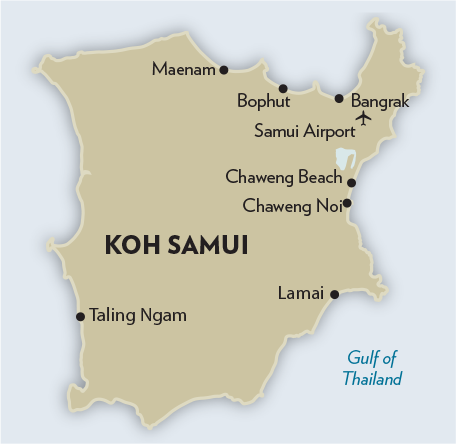
There are many more livable neighborhoods in Samui. Here are my top three favorites:
Neighborhoods for Long-Term Living
Bangrak and Bophut Beach
A little less than two years ago, as I mentioned, I lived in Bangrak, an area on the Northeast side of the island near the airport, Bangrak Pier, Bophut Beach, and Big Buddha Beach. This part of the island is popular with expats who want all the convenience of the airport and the pier, and a nice strip of white sand to chill out on. Most mornings, I enjoyed my first cup of coffee at the Secret Garden Resort on Big Buddha Beach. The sun glistening off the forty-foot golden Buddha statue at Wat Phra Yai across the bay signaled that morning had broken. I loved watching the colorful fishing boats come and go on placid Bangrak Bay while planning my adventures for the day.
The most popular area in this part of Samui is Fisherman’s Village, characterized by narrow streets lined with old wooden shops, restaurants, and bars along Bophut Beach. On the weekends there’s a popular walking street and a well-known night market. Bangrak and Bophut Beach aren’t really party zones but places to relax with a glass of wine while you people-watch and enjoy the soothing sound of waves lapping at the shore.
There are some great places to eat at Fisherman’s Village. Try The Happy Elephant for authentic Thai cuisine, the Kobe beef filet at The Red Moon, or grilled lobster under the stars at CoCo Tams.
My go-to hunger-stopping hangout is Karma Deli. You’ll find it at the easternmost end of the village in a rustic wooden shophouse on the corner. It’s a proper deli with fine meats and cheeses imported from all over the world. The wine selection is impressive and it’s a great place to spend an afternoon noshing away and enjoying a crisp sauvignon blanc.
Many expats and snowbirds inhabit the elevated neighborhoods south of the beach in Bophut Hills, mostly in condos or villas with breathtaking sea views over an endless swath of swaying coconut trees. As with most of Samui, the further inland you travel, the higher you go and the more spectacular the views become.
Not only is this area convenient for transportation options, but it’s also near some of Samui’s finest resorts. The Anan-tara Bophut Resort is a five-star hotel and was featured in season three of The White Lotus series, now playing on HBO.
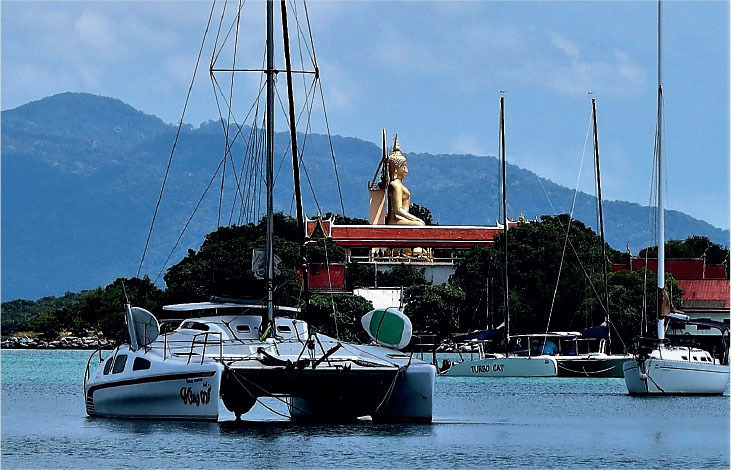
Renting a big one-bedroom condo near Fisherman’s Village costs about $600 per month. A three-bedroom villa with a big swimming pool costs about $1,500 per month. Walk less than a mile inland from the beach, and rental rates drop significantly. I lived in a two-bedroom, two-bathroom bungalow a ten-minute walk from Big Buddha Beach for $300 per month.
While the demographics of the expat community in Bangrak and Bophut Beach are a mixed bag, older expats tend to prefer this area for its convenience and charm. I found this to be the most universally livable neighborhood on the island because of its beach access, affordable housing, and a plethora of choices for eating, drinking, and entertainment.
Bangrak and Bophut would be the easiest places for anyone to seamlessly transition into island life in Samui.
Maenam
Another area that attracts retirees is just to the west of Bangrak on the North Coast, in the sleepy village of Maenam. Here over five miles of coconut-fringed golden sand greets visitors who prefer a more authentic Thai seaside experience. The longest beach on the island, Maenam has been a backpacker haven for many years, and still retains a mellow vagabond vibe.
The typical accommodations available on the shores of Maenam are cozy beach bungalows parked right on the sand. While some upscale resorts exist in this neighborhood, most people seek it out for the laid-back, no-frills atmosphere. The tourists I saw in Maenam were primarily families or young couples, with some older expats chilling out under umbrellas sipping fresh coconut juice and working their way through the latest Grisham novel.
Inland, the residents of Maenam can appreciate numerous temples, an elephant sanctuary, a nine-hole Frisbee golf course, and the prestigious Santiburi Samui Country Club, which caters to real golf enthusiasts. A few miles west of Maenam on the corner of the North Shore, you’ll find The Four Seasons Resort Koh Samui, another filming location for The White Lotus.
My favorite part of Maenam is the eclectic collection of funky coffee shops and cafes like Baanairai Farm and Cafe and About Cafe. It’s also home to some mouth-watering seafood joints. I recommend The Fish Restaurant for sea bass steamed in ginger or barracuda with black pepper sauce.
Most people live in bungalows or small villas with rental rates ranging from about $600 per month for a homey two-bedroom place to $1,500 for a palatial four-bedroom family-style home.
If I were to buy a house in Koh Samui, Maenam would be my preferred location, as the variety of homes available is incredible. You can find a spacious one-bedroom condo for $85,000… a 500- square-foot studio with a sea view for $115,000… a two-bedroom, two-bath villa with a pool for about $175,000. Or opt for a little more luxury with a three-bedroom, three-bath with a bigger pool for $260,000… or a brand-new, off-plan four-bedroom villa for $300,000.
The pandemic crushed the housing market in Samui. No tourists for two seasons meant no rental income for many property owners and precious few prospective buyers. The market is still flooded with houses and condos priced at very attractive levels. New housing projects that were delayed are back on and selling briskly. As the market rebounds, I expect property values to follow suit.
Maenam is the part of Samui that appeals to the widest range of visitors and in my opinion, represents one of the surest property investments on the island.
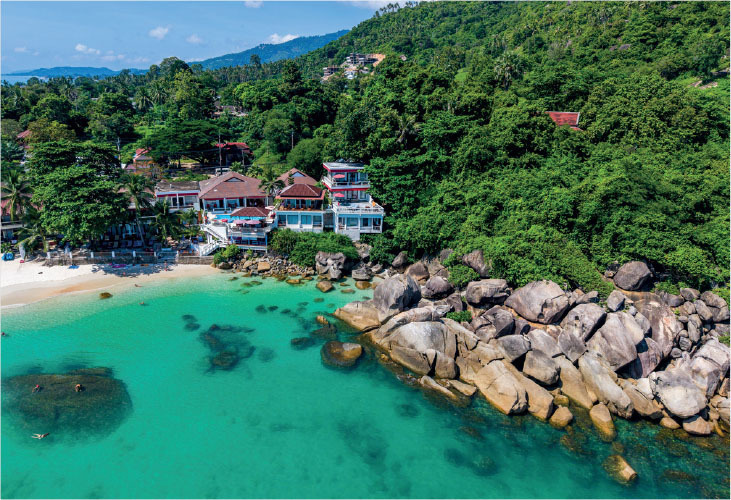
©PIERRICK LEMARET/iSTOCK
Lamai
The neighborhood I enjoy spending time in the most is Lamai Beach. It’s on the island’s southeast coast and is renowned for inspiring sunrises and a laidback yoga-hippy vibe.
Lamai is the second-largest town in Samui and second only to Chewang in terms of popularity. But no “package tourists” are coming to Lamai—it’s a less homogenized holiday destination. The food is more authentic. The hotels and resorts are less corporate. Nobody is cruising the beach trying to sell you anything. With three miles of soft white sand and a calm, shallow bay with no undertow, it’s perfect for young families. Impressive granite boulder formations jut out into the aquamarine gulf, giving this part of Samui a distinctly dramatic coastline.
The visitors I see in Lamai are a pleasant blend of Thais enjoying some domestic tourism and foreigners who prefer a kinder, gentler day at the beach. Weathered bungalows and rustic resorts dot the beach and there’s a view to fit every budget.
When I go to Lamai, my favorite place to plop down on the beach is in front of Baobab, a genuine French café right on the sand with some of the best breakfasts on the island. From fresh croissants to spicy Thai noodles, I could lie on their sun loungers under an umbrella and eat all day, and I usually do.
The town of Lamai features several long streets dedicated to restaurants, bars, and shops aimed at tourists, but not in a cheesy, pushy way. There is a McDonald’s, but that’s about the only Western franchise you’ll see in Lamai.
Kob Thai Restaurant serves up authentic Thai cuisine in a thatched-roof-and-ceiling-fan atmosphere. My favorite oyster bar of all time is Oyster Bar X Samui, serving oysters from six regions and champagne by the glass. The best vegan restaurant I’ve ever been to is Wild Tribe Superfood Café, offering a creative menu of plant-based dishes. And, every time I’m on the island, I make a point to visit Thai Kitchen by Tat—to be charmed by Chef Tat and to make a fool of myself over her Red Curry Duck.
Lamai is where you’ll find Western expats living in every possible description of home. From Thaistyle houses on stilts to condominiums, luxury villas with private pools, and small studio apartments, they choose this area because of its slow pace and affordability. The cost of living on this part of the island is 20% less than the more developed North Shore. Most Lamai residents I’ve talked to never venture up the coast to Chewang unless they have to.
Most of the resorts in Lamai have oceanfront accommodations, but they can get pretty pricey. If you want to live close to the water, many resorts offer bungalows along the lengthy gap between Lamai Beach Road and the beach.
During one low season, I approached the manager of a beach resort in Lamai and asked if I could get a discounted rate for a three-month stay. I rented a 650-square-foot one-bedroom bungalow located in the shade of a coconut grove—just 200 yards from the beach—for $475 per month. The savings made the short walk to watch the sunrise every morning worthwhile. Bargaining like this is common in Thailand, as most resorts are open to providing significant discounts for long-term guests.
I love visiting Lamai, but I’m not sure I could live there full-time because it makes me incredibly lazy. I’ve had too many days there when the only thing I crossed off my list of things to do was “sunrise.” This place is perfect for retirees who want a slower pace of life near Samui’s best beach. And if I ever decide to actually retire, you’ll probably find me in Lamai.
Things to Do in Samui
Samui offers a seemingly endless supply of fun… Since the island is a world-class holiday destination, all the touristy activities are available, such as mini-golf, tennis, cooking schools, Muay Thai gyms, water parks, zip lines, bungy jumping, laser tag, etc.
I would love to be a kayak salesman in Koh Samui, as kayaking appears to be one of the most popular activities on the island. Almost every vehicle I see on the road has a kayak or two strapped to the roof (or in the bed if it’s a pickup truck). Anything that happens in, on, or around the water is popular on Samui. Kiteboarding, windsurfing, and paddleboarding are all well-suited activities, as the sea at most beaches is relatively shallow with calm tides.
Sailing enthusiasts are all over Samui, and one of my favorite pastimes is to sit on the beach and watch the sleek catamarans slicing across the bay. The Samui Regatta happens in late Spring and attracts sailors from all over the world.
I met a group of Australians who live in Lamai and are members of a sport fishing club. They go out three to four times a month, catching barracuda, white snapper, red snapper, cobia, shark, and even some impressive sailfish. The club hosts tournaments several times a year.
If sand and saltwater aren’t your thing, put on your hiking shoes and try some of the challenging mountain trails found further into the island’s interior. Coconut farms, rubber tree plantations, and water buffalo grazing in the shade are the backdrop, and waterfalls seem to be cascading around every turn. Na Muang and Hin Lad Waterfalls are the two most popular, with moderately challenging hikes up to each one.
I prefer Hin Lad for its welcoming pool of sparkling mountain water, which is perfect for a swim after a long, sweaty hike. It is also home to Wat Hin Lad, a small Buddhist temple nestled in the shade of a massive sacred Bodhi tree. You can spend some time meditating with the resident monks before meandering down the mountain in a serene state of mind.
Who Should Live in Koh Samui?
Samui is a good fit for a variety of expats. Nature lovers and beachcombers could not ask for a better location, as the island is teeming with an unrivaled variety of flora and fauna. From waterfalls to windsurfing, Samui is all about plugging into nature.
Older expats and retirees who want to stay active and healthy while feeling like part of the community should put Samui at the top of their list. Professionals lucky enough to work remotely will love the balance between the sleepy island vibe and the modern 5G amenities.
Samui is not for city dwellers, but Bangkok is 1.25 hours away by air. (Pattaya and Chiang Mai are less than two hours away.) Daily flights from Samui to Singapore are about two hours. Daily flights from Samui to Hong Kong are just over three hours.
Anyone who enjoys small-town friendliness will love Koh Samui. People gather on the beach at sunset to share stories from the day. Neighbors look out for each other, creating a closer expat community than many realize.
The beach, the vibe, and the people swirl together, creating the most livable island I’ve found in Southeast Asia.
Bart Walters is IL’s Thailand Correspondent. He has lived and traveled throughout Thailand for 25 years, working as a real estate developer, a college professor, and a marketing executive. He’s published numerous articles about what it’s like to live in Southeast Asia.
Bart Walters

Also in This Issue
Portugal’s Undervalued Coast… and Is it Time to Buy in...
◼Alan U. asks: Hello Ronan, I’m interested in buying an investment property in the Algarve region of Portugal, with hopes of...
Upgrade Your Lifestyle and Discover Pura Vida in Magical Costa...
A Gentle, More Fulfilling, Fun Life Awaits In the Friendliest Country on Earth Fast Track Costa Rica Conference May 24-26,...
Forests, Fortresses, and Spies: Unforgettable Day Trips From London
What’s the connection between a medieval castle, an ancient forest, and a little-known historic site where WWII secret codes were...
Portugal’s Undervalued Coast… and Is it Time to Buy in Argentina?
◼Alan U. asks: Hello Ronan, I’m interested in buying an investment property in the Algarve region of Portugal, with hopes of...
Upgrade Your Lifestyle and Discover Pura Vida in Magical Costa Rica
A Gentle, More Fulfilling, Fun Life Awaits In the Friendliest Country on Earth Fast Track Costa Rica Conference May 24-26,...
Forests, Fortresses, and Spies: Unforgettable Day Trips From London
What’s the connection between a medieval castle, an ancient forest, and a little-known historic site where WWII secret codes were...