


24 min to read
|Jan 2023
The World’s Best Places to Retire in 2023

 1
1 Print or download


The weather is good, the people are wonderful, and the pace of life is chilled,” says Ray Schmarder of life with his wife Evanne in Lagos, on Portugal’s Algarve.
“My total cost of living here is just 50% of what I was paying in Denver. It’s wonderful!” says Cindy Sheahan who moved from Colorado to the northern Portuguese city of Porto last year.
“We can afford to do more here and really enjoy life. Most mornings for us start out on the terrace enjoying the ocean views or reading,” says Rhonda Pearce. She and her husband Ben moved to sunny Tavira after losing everything when Hurricane Harvey destroyed their home in Texas.
These are just some of the many expats we have spoken to in the last year who have made Portugal their home. Perched on the edge of western Europe, this once-overlooked little country was the clear winner of this year’s International Living Annual Global Retirement Index (more on that in a minute)…and with good reason.
As well as offering a laidback lifestyle and a massive variety of locations for such a small country, Portugal also boasts a choice of visa options whether you’re retired or are still dipping into the world of work…the strong dollar has made it one of, if not the, most affordable country in Europe right now…and the people are some of the friendliest you’ll find anywhere in the world, making Portugal an easy place to be.
While Portugal topped this year’s Index, it’s only one among many happy, stress-free, good-value retirement destinations the world over. We’ve been telling International Living readers that for over 40 years… and it’s still very much the case today. In a time when day-to-day living costs in the U.S. seem to be on a constant upward trend, there are lots of places where your dollar will go further, where luxury isn’t just for those with deep pockets, and where you can actually enjoy life without worrying about how you’ll pay next month’s bills.
Whether you want to lounge on a beach, cocktail in hand as the tropical sun glints off the aquamarine sea… live in a buzzing and vibrant big city stuffed full of culture and diversity… or you fancy a tranquil and secluded spot in a cool-climate highland town, there is a retirement haven for you.
But how do you choose where to go when you have so much choice?
That’s where our annual Global Retirement Index comes in. This Index is a snapshot in time, a way to look at the state of affairs in the best-value havens around teh world right now. And it’s also a tool you can use.
Inside, we compare, contrast, rank and rate the world’s top retirement havens across seven categories so that you can begin to make sense of the ways each place shines. No one country is perfect for everybody. But when you bring your priorities to this Index—your list of the things that are most important to you in an overseas retirement haven—you’ll start to see your best options emerge. And that’s the point.
You’ll find the Index itself further on. But for right now, we’re going to focus on the countries that took the top three spots for 2023—Portugal, Mexico, and Panama. We’ve selected several top locations in each country, all communities we think are worth considering if you’re looking for that perfect overseas spot.
#1 Portugal—The Best of Anywhere
The sound of church bells ringing over cobblestone plazas…the silver flash of sunshine glinting off olive leaves… the scent of bougainvillea draped over a whitewashed porch. Nowhere else in Europe comes close to Portugal’s atmosphere of unhurried calm.
In Portugal, you’ll find a compact country that packs more into its borders than most places twice its size. It’s got everything from rolling vineyards and languid river valleys to energetic cities brimming with nightlife and mouthwatering restaurants. Quirky mom-and-pop stores sell everything from thimbles, to teacups, to scythes…while modern malls provide the products you’re accustomed to at prices you’ll hardly believe (premium German pilsener for under a dollar a bottle? You bet!). Take to the road, and you’ll find soft-sand beaches without a soul in sight, glittering coves with sea-stacks and limestone arches, and small-town market plazas where farmers sell fresh produce direct from their land…right in the shadow of towering medieval castles. There’s even skiing, high in the craggy Serra da Estrela mountain range.
All this, in a country that’s only half the size of Kansas. It’s safe and politically stable (traditional small-town life is still very much alive in Portugal) and it offers a super-low cost of living that includes top-quality medical care. Beaches, mountains, sunshine, golf, surfing…it’s the essence of Europe, but it’s as affordable as Asia.
I’ll come clean here: I’m biased. Portugal was the first overseas country I ever lived in, and I’ll probably never lose my affection for it. It was the first place I’d been where my lifestyle was no longer restricted by my finances. Within reason, I could afford pretty much whatever I wanted, whether that was a weekend at the coast, a night on the town, or a better bottle of wine than I was used to. Today, a couple can live comfortably in Portugal’s interior, or in small cities, from about $2,500 a month. Figure on spending a bit more, around $2,800, in the bigger cities like Lisbon or Porto.
The sense of freedom that comes with a whole new world of spending power is intoxicating. Life becomes fun. Stresses you didn’t even realize you had melt away. It actually takes a little getting used to— not hesitating at every purchase.
As small countries go, Portugal is more diverse than most. Big-city energy dominates Lisbon and Porto, but on a scale that’s more human than other cities (think pedestrianized laneways and terrace cafés rather than anonymous skyscrapers and plate-glass storefronts).
Elsewhere, the atmosphere is much more relaxed. For the most part, Portugal is rural farmland punctuated by market villages which, in their historic centers, look much the same as they did 200 years ago. (That often includes a solid 13th-century castle at the highest point of town.)
What you can’t fail to notice in Portugal, though, is the sea. A history of seafaring runs deep in the national character, and, wherever you are in Portugal, the Atlantic Ocean is never more than 140 miles away. The country has lots to choose from, but three main south-coast towns give a flavor of what’s on offer: Lagos, Vilamoura, and Tavira.
Lagos: Lagos is the historical heart of the Algarve region on Portugal’s sunny southern coast. While much of the Algarve consists of master-planned golf and tennis resorts, populated largely by affluent northern Europeans escaping the winter gloom, Lagos stands apart. That’s mainly due to its well-preserved Old Town and historic harbor area.

© Nazareen Heazle
“As lovely as its beaches are, Lagos has far more to offer,” writes IL contributor, David Gibb. “You might choose to walk the pedestrian promenade running alongside the marina in town, browse the many vendor booths, and pick one of the many curbside cafés or restaurants to take a break and indulge yourself. From jazz bars to classic rock clubs, nightclubs and cozy pubs, along with all sorts of international cuisine, it’s all right here. My wife, Beverley, and I enjoyed an all-you-can-eat Japanese dinner (with a menu of over 100 items) for only $16 each, followed by cocktails for $4.50 and pints of beer for $2.30.”
Vilamoura: A resort community, built around six golf courses, gorgeous beaches, a large marina, equestrian center, and recreational areas, Vilamoura is a landscaped, manicured, and exceedingly comfortable place to live. What distinguishes it is that it’s modern and purpose-built, with a look that more closely resembles an upscale residential community in Florida or California than the traditional cobblestone hill towns of Portugal. International expats make up a significant portion of Vilamoura’s residents, drawn by its warm climate, modern infrastructure, and spacious homes. A 900-square-foot, two-bedroom, two-bathroom condo with terrace and community pool in Vilamoura typically costs around $900 a month.
Tavira: A former Roman seaport, Tavira town is a warren of cobblestone streets, traditional white-washed houses, and dozens of churches. Many of the buildings are clad with exquisite azulejos, the ornamental blue and white tiles so typical of Portugal. “Tavira’s lively café culture is where expats and locals mingle to enjoy warm custard tarts with espresso or delightful Portuguese wine for just a few euros a glass,” says IL Portugal Correspondent Terry Coles. As far as healthcare goes, there are plenty of choices. In addition to a clinic in Vale Formosa and a health center in the nearby picturesque town of Olhão— famous for its riverfront markets—there is access to more than a half-dozen hospitals spread throughout Faro, Loulé, Alvor, Portimão, and Lagos. And if wanderlust strikes, you can soon be in Sevilla, Spain about 90 miles away.
#2 Mexico—A World Away…But Just Over the Border
At the opposite extreme, Mexico is the largest of the countries we regularly write about at International Living. It’s a destination of incredible variety, and despite being so close to the U.S. that you can easily drive there, Mexico’s true character is surprisingly misunderstood. Make no mistake—the mental picture of Mexico as a border-land of arid desert and dusty pueblitos is only a tiny part of the story. In fact, Mexico ranges from exquisite Spanish colonial cities to palmfringed Caribbean islands, cool highland villages to jungle haciendas, vineyards to banana groves. We’ve chosen three spots to focus on, but whatever your pleasure, chances are you’ll find it in Mexico.
Lake Chapala: “I love the weather,” says Christine Laberge of her home in Ajijic, Mexico. “The surrounding mountains turn bright green and lush with the summer rain. I have a splendid view of the lake from my home, a great group of friends, and a healthy lifestyle.”

© Bob Hilscher/iStock
The cool highland region surrounding Mexico’s Lake Chapala—known locally as “lakeside”—is home to a long-established group of U.S. and Canadian expats. It’s a strong community, and as such, is one of the easiest places in the world to move to—English is spoken extensively, and numerous expat groups, both online and in-person, mean that nobody needs to be lonely. Christine, for example, plays pickleball, practices Pilates, walks along the lake, and works out at the gym.
“The way I see it,” she says, “Lakeside is experiencing a grassroots movement. There’s a growing awareness about how people can retire and actually add years and enjoyment to their lives by staying active for as long as possible.”
In the towns and villages of Lakeside— Ajijic, Chapala, Jocotepec and more—less than an hour’s drive from the big-city attractions of Guadalajara, but far enough away to be quiet and picturesque, active living is easy.
Playa del Carmen: “Out of all the beach cities in Mexico, Playa del Carmen is definitely one of my favorites, if not #1,” writes IL Latin America Correspondent Jason Holland. “First, there’s the beach. You can’t beat that powder-soft white sand and that incredibly blue Caribbean water, which is always warm and inviting.
“In the heart of the tourist area, the beach can get crowded. So I head north, a few minutes’ walk from the heart of the action, to Playa Punta Esmeralda. It’s set on a wide bay and is lined with palm trees and tropical foliage. Something of a local’s hangout, it’s more low-key. “Then we have to talk about 5th Avenue, the miles-long pedestrian promenade that is lined with shops, cafés, artisan crafts, luxury department stores, night clubs, chic boutiques, and, of course, restaurants of every cuisine. You can find something fun to do any time, day or night.
“Fifth Avenue parallels the beach, which means you can easily switch between the two…or even combine them at one of the beach clubs or restaurants with tables right on the sand.”
Querétaro: “When I used to think about Mexico, based on my travels here nearly 20 years ago, visions of big waves, hot sand, salty margaritas, and cold beer came to mind. Back then, it was mariachi music and the constant squawk of loudspeakers; with an exciting hint of lawlessness. But a lot has changed in 20 years and when I arrived in Santiago de Querétaro in 2021, all of my preconceived notions about Mexico were dashed,” writes IL Mexico Correspondent Wendy Justice. With a preserved Spanish colonial centro that dates back to 1531, the sophisticated highland city comes with numerous benefits. Local cuisine is just one of them.
“Restaurants are everywhere and offer incredible value,” Wendy says. “For as little as $3, you’ll have a choice of entrées—anything from carne asada (thinly sliced, seasoned beefsteak), grilled fish, to standard Mexican enchiladas and chilis rellenos. It would cost more to cook at home, so it’s a perfect excuse to eat out frequently.”
It’s all part of a lifestyle that involves much more time spent out and about than is typical in the U.S. or Canada. As a university city, and a regional hub for art, drama, and cultural events, Querétaro is always entertaining.
“If you live in or near the historic district, you can get along quite well without owning a vehicle,” says Wendy, “though rents are generally lower in the suburbs—I’ve seen some attractively furnished condos and houses listed in the $400 per month range.” And speaking of costs, a couple could live comfortably in Querétaro on a budget of $1,600 per month or less. A budget of $2,800 would allow for a luxurious lifestyle, including a spacious, Western-style home, a vehicle, and frequent meals at those many fine restaurants.
#3 Panama—Good Things, Small Packages
Last year’s Index winner, Panama, slips into third place this year. That’s mainly due to currency conversions—your dollar buys a lot more pesos or euros now than it did in 2022, so Portugal and Mexico offer even better value than usual. Panama, though, uses the U.S. dollar as its currency, so there are no fluctuations—good or bad—to skew the numbers.
For many, though, the convenience of no currency conversions, and the security of living in an economy backed by the strength of the dollar, is a draw. And as Jessica Ramesch, our Panama Editor, puts it, “Whatever your dollar gets you in the U.S., you’ve always been able to get more bang for that same buck in Panama. Both countries may have seen price increases this year, but we’re still proportionately cheaper. A couple can live well on $2,900 a month, including rent, almost anywhere in Panama. (Choose a little haven like Caribbean Bocas del Toro and you and your partner could live well on as little as $2,300 a month.) With a slightly higher budget of $3,400 to $3,900 a month you’ll live luxuriously…for far less than you’d spend anywhere comparable in the U.S.”
Just like Portugal, Panama is a small country with a lot of good stuff packed in. Two spectacular coastlines, a sophisticated, international city, and an interior that ranges from tropical jungle to spring-like highlands…Panama has a spot for everyone. What expats love about it is how familiar things are. Sure, you can seek out (and find) exotic cultures, indigenous peoples, and untracked wilderness, but when you’re not on an expedition, you’ll find the familiar malls, supermarkets, and restaurants a refreshing comfort. Where to start? We’ve chosen three spots in Panama to whet your appetite.
Panama City: As you descend into Tocumen International Airport, the hinterlands of Panama City defy expectation. Where you’d expect suburbs, highways, and industrial zones, instead you see flowing hills corrugated with dense hardwood forest in deep emerald green.

© International Living
Once you enter the city proper, it’s another story. Panama City’s Avenida Balboa glitters on both sides. Northward, it’s a tetris of smoked-glass skyscrapers, while to the south, tropical sunshine hits the mirrored surface of the Pacific Ocean and shatters to a billion points of white crystal. Here you gain all the attractions of any major city—from international dining to ultra-modern mall shopping—but there’s also the beauty of a wonderfully preserved Spanish colonial old town, ocean views, and protected rainforest areas within city limits (the rainfall is crucial to the working of that other Panamanian superstar—the Canal).
Choose high-rise, high-specification urban living in the Punta Pacifica zone (where Latin America’s highest-rated hospital is located) or a quiet suburban family home in the leafy Clayton neighborhood…or anything in between the two. The options in Panama City are endless.
Coronado: The gates of Coronado hide a vast residential complex, a world of its own that fulfills just about every need an expat could have. With accommodation ranging from condos in a 20-story tower through to Balinese-style standalone mansions, it was Panama’s first resort, and you can tell. The gardens are established, the trees on the golf course and country club are fully mature, the reed-fringed lake is mirrorlike. From the soft sand of Coronado’s beach strip, the jungle-clad islands offshore could pass for Thailand.
Coronado is a luxury destination rather than a low-budget spot. By Panamanian standards, it’s relatively pricey, but you get a lot of luxury for a lot less than you’d pay in similar destinations in California, Hawaii, or Florida. U.S./ Canadian expats mostly choose to be close to the beach, shops, expat hangouts, and other conveniences, and typically pay $1,000 to $1,500 a month to live in nice homes or upscale buildings with pools, gyms and social areas, ocean views, and direct access to the golf course.
To ice the cake, it’s warm all year. The mercury stays in the 80 F to 85 F band every day. The beach, which is walking distance away, freshens things up with sea breezes.
Supermarkets, big-box stores, familiar fast-food outlets, and little mom-and-pop diners line the sides of the Pan-American Highway, just to the north of the beach zone. Head east for an hour and you’ll hit the bright lights of Panama City. And if you head inland, just 20 minutes’ drive brings you to crashing rivers, deep ravines, protected rainforest, and thundering waterfalls.
Boquete: “I just found the physical ‘look’ of the town charming,” says Christine Kunert, who has lived part-time in the Panamanian highland town of Boquete since 2011. “Gingerbread houses framed by flowers, rock-strewn streams…I find that Boquete is the perfect size to provide for the necessities. All the day-to- day needs are covered: food and groceries, affordable housing, functional infrastructure—they’re all here.” Hikers, nature-lovers, and a diverse population of international expats enjoy the wild countryside and permanently springlike climate of Panama’s premier hill town.

INTRODUCING GREECE
We’re delighted to welcome Greece onto the 2023 Annual Global Retirement Index. A delightful southern European location of unspoiled islands, ancient cities, and Mediterranean lifestyle, it’s been on our radar for some time. Affordable, accessible, and with great healthcare, it’s also relatively simple to live in long-term. For most expats in Greece, simply proving you have adequate income—€2,000 a month (around $2,050)—and health insurance is key to qualifying for a oneyear, renewable residence permit.
HOW WE COMPILE THE RETIREMENT INDEX
Data is everywhere, from the CIA World Factbook, through Wikipedia, to categorized tables on OurWorldinData.com. And we encourage you to consult sources like these in your research.
However, understand there’s a difference between raw facts and expert interpretation. At International Living, we compile our Annual Global Retirement Index in collaboration with our sources on the ground in the countries we survey. They’ve lived there, walked the miles, and crunched the numbers long after the honeymoon phase of being in an exotic new country has worn off. They’re the human element that sees past a raw statistic like, say, how many hospital beds there are in a given country—where they are rarely evenly distributed—and instead, visit hospitals, health centers, and doctors’ clinics in the communities we recommend to assess accessibility, quality of care, costs, and more first-hand.
When you take into account the years and decades our contributors have spent living overseas, that amounts to a sum of experience that’s unparalleled anywhere.
This Index is meant to be user-friendly—a practical document that benefits from the subjective inputs we plug into it. We rely on—and value—the good judgement of our contributors based around the world. Yes, we include statistics, but they aren’t the be-all, end-all. Our aim is to provide useful context, data—with the know-how you need to understand it.
This year, we’ve added a new category to the Index, the Affinity Rating. It allows us to consider readers’ preferences in our calculations. Where are readers actually interested in going? And where are they, in fact, settling?
What’s more, we asked our well-traveled senior staff to weigh in as well. They’ve spent quality time in the countries on our Index—and this year we integrated their thoughtful feedback into that Affinity Rating—a wealth of informed opinion. You’ll find the full breakdown of what we consider in each category in the full Global Retirement Index Report 2023, here: https://intliving.com/index2023.
WHY HAVE COUNTRIES DROPPED OFF THE INDEX?
This year, we’ve sharpened our focus to 16 top destinations—places where your overseas retirement needs are truly taken care of, and where, critically, you’ll find great values.
Frankly, a place is not much use as a retirement destination if you can’t retire there easily and affordably. Recently, some spots which previously offered retirees practical long-term visas have modified their approach.
In some cases, they’ve moved their focus to remote workers and digital nomads. In others, they’ve U-turned on their attitude toward long-term expats entirely.
While countries such as Vietnam, Croatia, or Malaysia are still worth a vacation or part-time relocation…until they display more clarity and commitment on retirement-visa options, they’re off our list. (For more details on Malaysia, see your downloadable report [link below] for our Malaysia Correspondent’s take on the current situation there.)
WHY OUR REAL ESTATE EXPERT BOUGHT A HOME IN PORTUGAL
Ronan McMahon
Stepping out onto my terrace I’m met by a soft Atlantic breeze. In front of me are rolling dunes, miles of golden-sand beach, and a coastline dotted with cliffs and coves, stretching on forever.
Here on Portugal’s Silver Coast, it’s the beaches that first impress. They are long, wild, and sandy—ideal for walkers. In the winter, the world’s surfers gather here to ride waves the size of multi-story buildings. And year-round, golfers come to play among the undulating dunes with their spectacular Atlantic views.
There’s a treasury of historic towns and fishing villages to explore, and you’re spoiled for great seafood, clifftop walks, and entertainment.
As a real estate investor, I’m used to assessing opportunities with a calculating eye. I look at the health of the local market; its potential for growth; supply constraints; the cold, unemotional numbers. If everything adds up, I look for a deal.
The Silver Coast, however, is a different kind of prospect. One that pays dividends not to your bank account, but to your lifestyle. And since buying here last year, drawn down more than my money’s worth.
For my beachfront condo, my total monthly payments (including mortgage, taxes, HOA fees, and golf club dues on two great courses) come in at just under €1,110 ($1,133). That’s less than what property tax alone would come in at in California. And I’d argue that the beaches here are nicer.
Portugal’s Silver Coast (Costa de Prata) stretches about 155 miles from Assenta, an hour north of Lisbon, to the mouth of the Douro River at Porto. Framed by the protected landscape of the Serra de Montejunto and the raw beauty of virgin Atlantic beaches, the Silver Coast is both the home of Portugal’s only marine nature reserve and a mecca for surfers and golf lovers from around the world.
Yet, mass tourism is remarkably absent. Everything here is lovingly preserved and unspoiled. The seaside towns combine attractive old architecture with modern services and usability.
I bought my part-time base about halfway between Óbidos (a spectacular medieval walled town ) and Peniche (an old fishing village set on a peninsula that has transformed into a popular tourist spot thanks to its exquisite beaches), in Praia D’El Rey Golf & Beach Resort. It’s one of the oldest and most established resort communities on the Silver Coast. I bought here because it meets all of my personal criteria for a base. There’s incredible golf steps from my door, and I’m about as close to the beach as you can get in Portugal. It’s quiet and serene but with good food and a vibrant town nearby.
For my beachfront condo, my total monthly payments (including mortgage, taxes, HOA fees, and golf club dues on two great courses) come in at just under €1,110 ($1,133). That’s less than what property tax alone would come in at in California. And I’d argue that the beaches here are nicer.
Portugal’s Silver Coast (Costa de Prata) stretches about 155 miles from Assenta, an hour north of Lisbon, to the mouth of the Douro River at Porto. Framed by the protected landscape of the Serra de Montejunto and the raw beauty of virgin Atlantic beaches, the Silver Coast is both the home of Portugal’s only marine nature reserve and a mecca for surfers and golf lovers from around the world.
Yet, mass tourism is remarkably absent. Everything here is lovingly preserved and unspoiled. The seaside towns combine attractive old architecture with modern services and usability.
I bought my part-time base about halfway between Óbidos (a spectacular medieval walled town ) and Peniche (an old fishing village set on a peninsula that has transformed into a popular tourist spot thanks to its exquisite beaches), in Praia D’El Rey Golf & Beach Resort. It’s one of the oldest and most established resort communities on the Silver Coast. I bought here because it meets all of my personal criteria for a base. There’s incredible golf steps from my door, and I’m about as close to the beach as you can get in Portugal. It’s quiet and serene but with good food and a vibrant town nearby.
My 1,400-square-foot beachfront condo came in at just €300,000 ($309,000). As a comparison, in Royal Óbidos Resort a short distance away, homes are significantly more expensive and not nearly as desirable—in my opinion. You’ll see price points of €500,000 to €800,000 for a spacious condo or medium-size townhome. They have nice ocean views but are certainly not ocean front.
Locals often refer to the Silver Coast as the Algarve of the north, and it certainly earns the title. It offers amazing beaches and natural reserves; lots of vibrant towns; a low cost of living, and a really great foodie scene

Also in This Issue
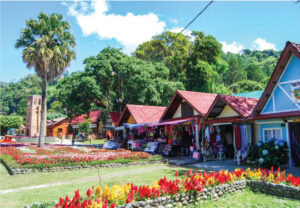
Calendar: Discover Low-Stress, Low-Cost Living in Panama
Fast Track Panama: Lifestyle and Opportunity Conference • February 10–12, 2023 • Panama City, Panama With 1,500 miles of both...
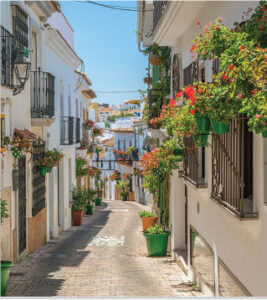
Globetrotter: Curiosities, Quirky Tidbits, Useful Notes
Each month, we bring you recommendations, odd notes, and useful tools to help you better navigate an interesting world. Conquering...
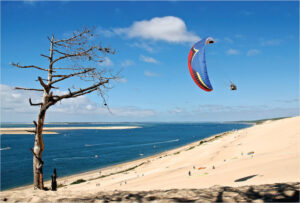
Turning Sand Into Money
I love having a beach as part of my daily routine. In Praia d’El Rey resort, where I own a...
Calendar: Discover Low-Stress, Low-Cost Living in Panama
Fast Track Panama: Lifestyle and Opportunity Conference • February 10–12, 2023 • Panama City, Panama With 1,500 miles of both...
Globetrotter: Curiosities, Quirky Tidbits, Useful Notes
Each month, we bring you recommendations, odd notes, and useful tools to help you better navigate an interesting world. Conquering...
Turning Sand Into Money
I love having a beach as part of my daily routine. In Praia d’El Rey resort, where I own a...