


9 min to read
|Jan 2023
This Tax-Free Island Offers the Perfect Retirement for Sailors
 1
1 Print or download


©RAVINDRAN JOHN SMITH/iSTOCK
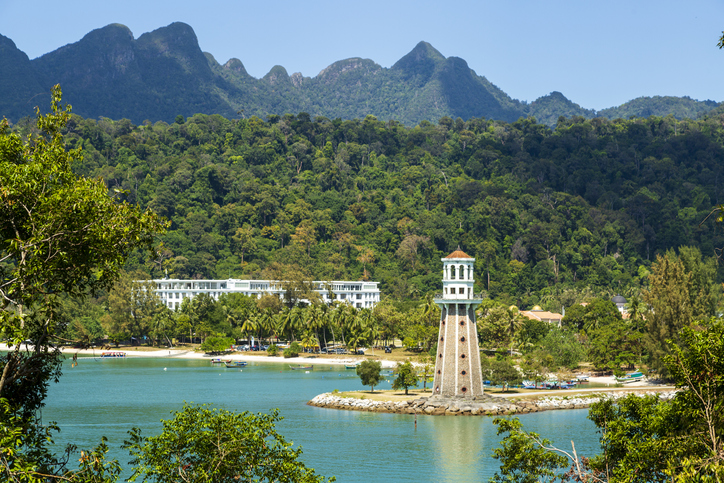
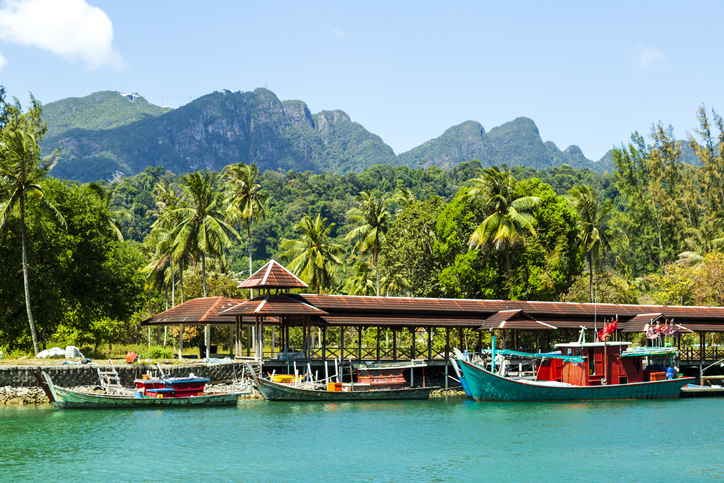
Sitting on the deck of a friend’s yacht, an ice-cold Tiger beer in hand, I was admiring the sea view in front of me… The stunning Malaysian island of Langkawi, with its limestone karsts jutting from the blue-green water.
I was wondering who gets the better view—those on the beach or those of us on boats—when a weathered-looking man in his 60s paddled the 500 yards from his boat to ours on an inflatable SUP.
James Morganti is the first true Yankee waterman I’ve ever met. “I wear as few clothes as is acceptable all the time,” he tells me.
James grew up working on boats and eventually became a professional marine carpenter. For most of his life, he split his years between the island of Martha’s Vineyard and the Florida Keys before coming to Malaysia.
“There are a lot of retirees here on Langkawi with boats,” he says. “Some who even do some sailing. And there are a few of us who actually live on our rigs, full time, no other known address.”
I’d arrived in Langkawi a few days earlier (after helping a friend sail his yacht from Thailand to here, as he was selling it to an American couple here), and this wasn’t the first time I’d heard it was a haven for retirees with an interest in sailing.
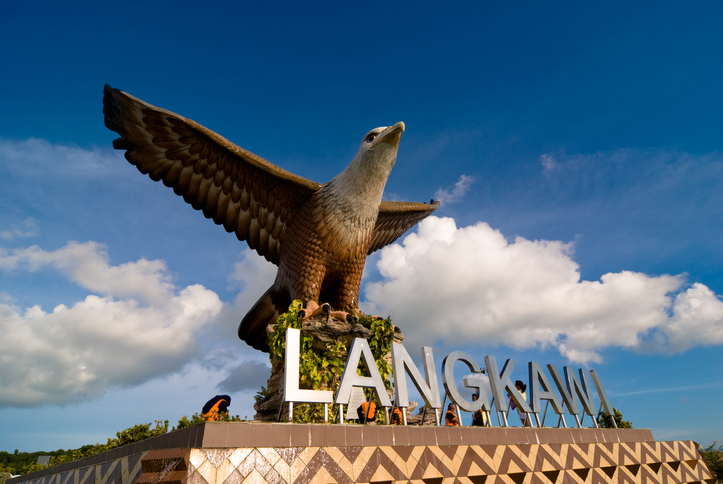
The Langkawi archipelago is made up of a group of 99 islands, located in the Strait of Malacca on the northwestern tip of Malaysia. A 40-minute flight from Penang, and an hour from the capital of Kuala Lumpur, Pulau Langkawi is the archipelago’s largest and most inhabited island. And it’s where you’ll find most of the expats.
“
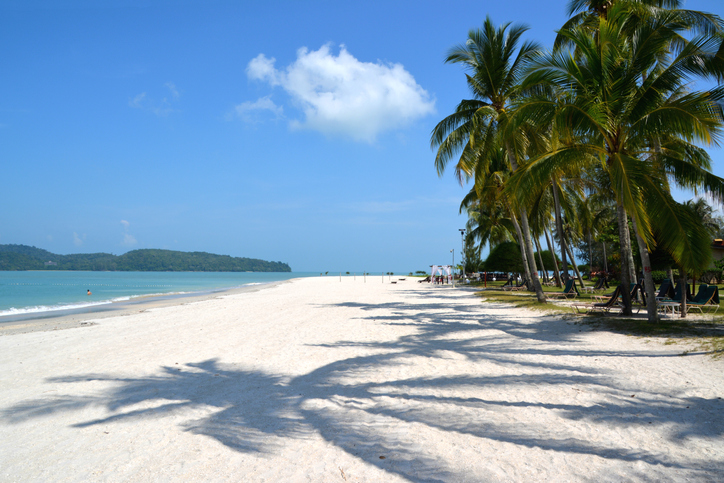
This extraordinarily gorgeous hideaway has it all… talcum powder white beaches, deep green jungle filled with exotic animals and rushing waterfalls, and a slow, laidback pace of life that’s untroubled by traffic jams and the hustle and bustle of modern life.
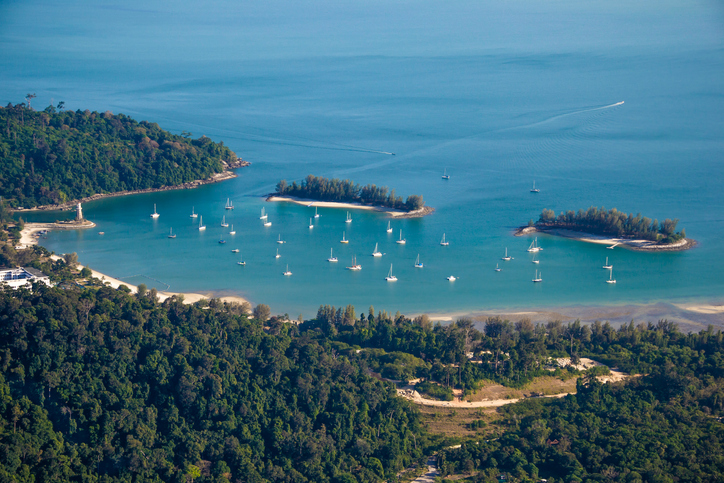
While this paradise island might be overlooked by many travelers, over the last few years it’s become an established sailing destination, attracting sailors from all over the world. One of the reasons is the abundance of mooring options at some of the lowest rates in Southeast Asia.
My friend’s yacht was moored in Telaga Harbor Marina, on the west of the island. It charges 350 ringgit ($80) per month for boats under 40 foot and up to 650 ringgit ($148) for larger vessels. The marina has shower and toilet facilities for sailors, as well as a lounge with free WiFi access. And there are adjacent shops selling all the essentials. The place is a one-stop, full-service station for boats.
And Telaga is only one of six harbors offering both all-weather and seasonal moorings around the island, giving sailors the opportunity to find the best location for them to stay for a while.
But you don’t have to live on your boat to enjoy the sailing around here. A lot of the expats here have taken it up as a hobby.
Like Stacey and Bill Zabrowski, the new owners of my friend’s yacht. Neither of them had ever even been on a sailboat until they came to live on the island three years ago. Both had lived their entire lives in landlocked Ohio.
When it came time to retire, they began by looking into the traditional snowbird retreats in the U.S., but after some research, their budget was looking pretty dismal. This is when they were encouraged by some old friends to look farther afield… all the way to Malaysia.
“Our friends had been sending us pictures of white-sand beaches and these green mountains around the village where they lived here on Langkawi,” Stacey says. “They were like postcards.”
“Then they started telling us we could rent a house in the gated community they lived in for $650,” says Bill. So they decided to visit and see what all the fuss was about.
“We came here with our retirement paperwork ready to go on our first visit,” Bill says. “If we decided it wasn’t for us, we’d wasted a couple of bucks.” But they did decide to stay.
“We’d never thought of sailing as a hobby,” Bill recalls. “We just thought it’s for rich people. Now in our third year here, and having done liveaboard trips for snorkeling and fishing, we’ve realized that sailing is something we can do. When our friends offered to go in for half of a boat with us and split the mooring and maintenance expenses, that sealed it. So we bought a boat.”
After the initial expense of purchasing the boat (which they described as “modest”), they figured it would cost about $200 for mooring and maintenance fees per month.
“Our decision to retire to another country halfway around the world was the biggest adventure either of us had been on,” Stacey says. “Getting a sailboat to explore this incredible part of the world is a continuation of that adventure.”

Besides sailing, another big draw for expats on Langkawi is the lower cost of living. It’s slightly cheaper to live here than the rest of Malaysia (a couple can live well, renting a modern apartment, for $2,500 a month on the mainland). It’s a tax-free island… things like beer and alcohol cost about half of what they do on the mainland… and it’s a shopper’s mecca.
While exploring the island, I got a better idea of everyday costs. I rented a motor scooter for $2.20 a day. In a local tea shop, I had breakfast of roti with a small dish of curried lentils topped with a fried egg for $1.50… plus another 50 cents for an endless cup of tea. Lunch for two in a franchise sushi place in the main town of Kuah cost just over $10.
I found that in general, prices for clothes, appliances, and everyday household goods are on the low side. T-shirts are $3… a refrigerator costs about $300… a dozen eggs are $1.50 and a pound of chicken was $2.
“One of the many reasons we came to live here full-time was because it’s a tax haven,” Mitch Holloway told me. “The cost of property, building, and maintenance is about 40% of doing the same in the U.S.,” he says. “And the island has no property tax.”
“
I was sitting with Mitch and his wife Terry at a cafe along Kuah’s main street—full of brightly colored shop houses and restaurants, it runs from the golden sands at one side of town to the 450-foot Maha Tower on the other. Mitch and Terry bought their first beach condo on Langkawi more than 10 years ago (for just $35,000) while they were still living full-time in Singapore.
“It’s an hour direct flight between here and Singapore, so we would fly here on a Friday night and leave Monday morning. Sometimes we would even charter flights with other couples,” Mitch recalls.
Terry works online, so when Mitch left his full-time finance position, they decided to build their dream house on Langkawi, as opposed to Virginia, where they had originally planned to retire.
“There’s nothing we’re missing here,” Mitch says. “We have top-notch golf, any kind of food you can imagine, international shopping, incredible beaches, and beautiful nature in the interior. Plus we have a great group of friends—some whom we’ve been close with for years and some we’ve only met recently.”
MM2H PROGRAM UPDATE
Keith Hockton, IL Malaysia Correspondent
The Malaysia My Second Home program (MM2H), one of the most, if not the most attractive long-term visa in Asia, has been through some significant changes in the last few years. Applications for the visa were suspended for over a year during COVID, and the paperwork was transferred from the Ministry of Tourism to the Ministry of Home Affairs.
To the astonishment of everyone, including some of the major stakeholders, there were some dramatic changes when visa applications reopened in 2021. According to the Minister of Home Affairs, which is now under the control of the immigration department, they wanted to attract “better quality” applicants, and they felt the best way to do this was to significantly raise the entry requirements. The minimum monthly income increased from 10,000 ringgit ($2,261) a month 40,000 ringgit ($9,000), and there was a major increase in the required Fixed Deposit, to 1 million ringgit ($226,000).
“
As a result of those changes, some people are applying for the Sarawak MM2H visa, which currently has much more attractive terms (Sawark is a Malaysian state on the island of Borneo). With this visa you can live in Sarawak or in peninsular Malaysia. A couple will need to show 10,000 ringgit ($2,261) a month in income (this can come from a salary, pension, or rental income) or a fixed deposit of 150,000 ringgit ($34,030).
In Sarawak, you can withdraw up to 40% of the fixed deposit after one year if the money will be used to pay for a house, a car, or for educational or medical expenses.
In 2022, Anwar Ibrahim became Malaysia’s 10th prime minister. Numerous agencies, both internal and external, are trying to persuade the new government to relax the current rules and regulations, and return to the long-term model that proved so successful in the past.
I’m keeping a close watch on this and will let you know when there’s any update.

Also in This Issue

Curiosities, Quirky Tidbits, Useful Notes
Each month, we bring you recommendations, odd notes, and useful tools to help you better navigate an interesting world. Visit...

What Will Be Europe’s Next “Breakout” Spot?
As I write this, I’m at a café in the Portuguese city of Caldas da Rainha, a historic spa town...

From Roman Ruins to Terrace Wine: Portugal for Every Taste
“We Wanted a Country That Was Safe” Names: Kathy Stearman and Keith GlynnFrom: Kentucky and New York CityLiving in: Coimbra, Portugal Kathy Stearman’s...
Curiosities, Quirky Tidbits, Useful Notes
Each month, we bring you recommendations, odd notes, and useful tools to help you better navigate an interesting world. Visit...
What Will Be Europe’s Next “Breakout” Spot?
As I write this, I’m at a café in the Portuguese city of Caldas da Rainha, a historic spa town...
From Roman Ruins to Terrace Wine: Portugal for Every Taste
“We Wanted a Country That Was Safe” Names: Kathy Stearman and Keith GlynnFrom: Kentucky and New York CityLiving in: Coimbra, Portugal Kathy Stearman’s...