


12 min to read
|Jan 2024
Curiosities, Quirky Tidbits, Travel Hacks
 1
1 Print or download


EXPERIENCES
Venture into the Mayan Jungle for a Tree Lovers Tour

©WILLIAM PERRY/iSTOCK
Mother Nature had rolled out the red carpet. At least, that’s what I thought as I cruised through a tunnel of towering scarlet trees on my way to the ruins of San Gervasio.
Cozumel island, on Mexico’s Riviera Maya, might be famous for scuba diving—but there’s equally amazing natural beauty when you venture inland to the jungle. Staring up into the wide canopy of a royal poinciana tree, whose fallen blooms had formed our vibrant roadway, was the perfect start to the Tree Lovers Tour.
Over the next couple of hours, local tree expert Tati led our tour group through jungle pathways—finding fungi and flowers, seedpods and cenotes, bees, bugs, and birds. As we journeyed, Tati taught us the medicinal benefits of plants like the waist-high pheasant’s tail, whose leaves are boiled and added to a healing bath for back pain, arthritis, rheumatism, and muscle and joint sprains, and the gumbo limbo tree, whose peeling red bark treats sunburn.
Plus, we learned about edible plants like the huge tamarind tree. Its seed pods hold a sticky sweet treat (similar to dates) that makes the tamarind drink popular throughout the Caribbean, Central America, and Asia. The Tamarind’s delicate draping flower clusters attracted so many tiny native (stingless!) bees that the tree seemed to hum.
Tati explained that the jungle provided everything to the Maya, even building materials for their homes; guano palms were harvested on the full moon to make thatched roofs strong enough to withstand hurricanes. She also pointed out trees sacred to the Maya, like the ceiba whose layered canopy was believed to be the thirteen stairs to heaven. (Its thorny trunk, a defense mechanism, works; that’s one tree I did not hug.)
If you’re in Cozumel, I highly recommend joining the tour. You can go in a group ($39 per person) or enjoy a private tour by booking through Tree Lovers Tour. Remember to bring water and wear hiking boots or tennis shoes—and some bug spray wouldn’t hurt.—Bel Woodhouse
TECH TIPS
The Best App for Frequent Fliers and Aviation Geeks

Ever since I got the Flighty app, I’ve known about flight delays before the airline does… and so much more.
Flighty shows you live data on your incoming plane, like unscheduled maintenance or inclement weather, so you’re kept well-informed of potential delays beforehand.
You can save your booked flights in the app by syncing to your phone’s calendar app. Or, if you’re less tech-savvy, look up your flight in the app by searching the itinerary and date. Then, 24 hours before takeoff, Flighty springs to life.
Its real-time updates on delays, gate changes, and boarding announcements beat both the airport departure board and my airline’s own app in informing me of my recent flight’s delay (I was returning to snowy New England over the holidays).
While I was waiting for my plane, I explored the flight history feature. I added flights I’d taken last year to my profile and learned all manner of stats and tidbits about my 2023 travels: miles flown (30,811), hours in the air (73) and lost to delays (only eight!), and types of aircraft flown.
Flighty’s free version is all you need for live updates and flight history going as far back as a year. A premium subscription delivers myriad additional data points for aviation geeks, plus the option to share your live flight updates with friends and family. An annual subscription cost me $47.99. Short-term subscriptions and family plans for up to six users are also available. —Kyle Beck
UNIQUE STAY
A Castle Stay and Rosé-Colored Sunsets in France’s Green Provence
If you drive too quickly along highway D48 in southern France, you may just miss the turnoff to Château les Crostes: an elegant hidden castle in the verdant countryside of Provence Verte (Green Provence). Only a 45-minute drive from mythic Saint Tropez, a stay here offers something not usually found along the bustling French Riviera… absolute serenity.
The warm turquoise and honey-yellow château belongs to the royal family of Luxembourg and sits on 136 acres of land surrounded by olive trees, vineyards, a tennis court, goat farm, and a Monetstyle, lily-padded lake—giving credence to the surrounding countryside’s name of Provence Verte. The winery and world-class bed and breakfast-can only be reached via a slim road which cascades through a sea of vine-covered hillsides and rustling olive orchards. The somewhat rustic introduction to the domaine—the French term for a winery—ends along the loopy road. What awaits is pure, sun-kissed luxury.
The château’s caretaker, Enora, greets each guest in the opulent foyer for a guided tour of the 17th-century building, which comprises both cozy couple’s bedrooms and spacious duplexes in lofty towers. Every guest has full access to the castle’s amenities, including downtime in the mahogany- and leather-filled library and full use of the chef’s kitchen. A sign-in clipboard lets you “check out” any of the domaine’s wines.
If you choose to enjoy a crisp Les Crostes rosé on the terraced veranda—watching the sun dip behind the vines—you may find Georges, an oversized and quite intrepid duck, waddling across the terracotta stones to make your acquaintance. The complex has 12 rooms and suites, with prices starting at €180 ($196) a night in the high season, or €230 ($250) if you’d like to add a breakfast in front of the château’s swimming pool. — Tuula Rampont
TRAVEL SMART
Get Prescriptions Overseas Fast
While staying in Spain recently, a friend of mine experienced the familiar, painful first symptoms of a urinary tract infection (UTI). She visited a pharmacy only to be told that she’d have to go to a hospital and be examined by a doctor in order to get antibiotics for the infection.
Meanwhile, her symptoms were getting worse—and the next morning, she was scheduled to start a challenging multi-day hike.
In desperation, she typed “How to get a prescription for UTI Europe” into a search engine. To her amazement, a solution popped up immediately: Mobidoctor.eu. She quickly filled out an online form detailing her symptoms and some basic personal health information. For $32, an English-speaking doctor in the EU reviewed her form and prescribed antibiotics the same day (if the form is submitted after 8 p.m., the prescription will be ready in the morning).
Though the pharmacy she visited did not carry the type of antibiotic prescribed, she messaged her Mobidoctor and within minutes, he revised the prescription to order an available alternative. The antibiotics cost her $3.
In addition to prescriptions, Mobidoctor offers treatment for such ailments as allergies, asthma, conjunctivitis, and malaria. Travelers can also schedule video visits with physicians to get diagnoses, referrals, and doctor’s notes for students.
Thanks to this convenient online service, my friend’s antibiotics worked their magic within hours… and her hiking tour went on as planned.— Amy Maroney
The Wine You SHOULD Be Drinking

The topic is Argentinian wine. And your first thought, quite likely, is “Malbecs from Mendoza.”
Not a bad first thought. Argentina’s Mendoza province certainly spits out some quality Malbecs (along with way too much mini-mart swill). But bonus points if your thought was Salta.
This is the province in Argentina’s far northwest corner. High-desert country, through the middle of which runs a gorgeous Andean valley, resplendent with mile-upon-mile of vineyards—some as much as two miles above sea level.
And those vineyards are producing Malbec, Torrontes, and Tannat wines that are, in a word, stellar.
I’ve toured the region and local wineries a few times, and the wines are bolder, fruitier, and more tannic because the grapes have to survive the intense, high-altitude sunlight and vast day-night temperature swings. That gives them a unique Salta fingerprint.
If you can find it, Bodega El Porvenir de Cafayate’s Laborum was blessed by Dionysus and Bacchus. It’s just an inky black glass of yum you’d sip over a late-night steak with a bit of John Coltrane in the background. Try the Puna 2600 Gran Reserva and the Salta Malbec as well (though I’d argue Laborum is better). The Gran Reserva grapes are grown at 8,200 feet, and only 12,000 bottles exist.
So next time the topic is Argentinian Malbecs, go to your second thought first: Salta. — Jeff D. Opdyke
COUNTRY UPDATES
The Malaysia My Second Home (MM2H) Program Makes a Comeback
For foreigners eyeing Malaysia for their potential new home—or for an extended stay—I have good news about the recent changes to the requirements for the Malaysia My Second Home (MM2H) program.
The MM2H was once Malaysia’s premiere visa for potential long-term residents, allowing non-citizens to live in the country for up to a decade—if they met certain financial requirements. The program was shuttered in 2020 due to COVID-19 and, when reinstated, had a requirement for a prohibitively high monthly income.
But now, on the ground in Malaysia, I’m hearing that these requirements will be changing—potentially for the better.
TG, founder of Malaysia’s most prolific MM2H agency, reports: “The updates have made the prospect of relocation, or a longer stay in Malaysia, more straightforward—and appealing—for those interested.”
The Ministry of Tourism has announced that the MM2H will soon offer three tiers:
- Silver, which requires a fixed deposit of 500,000 ringgit ($108,000) and comes with a renewable five-year visa.
- Gold, which requires a fixed deposit of 2,000,000 ringgit ($433,000) and comes with a 15-year visa (issued as three five-year visas).
- Platinum, which requires a fixed deposit of 5,000,000 ringgit ($1,082,000) and includes eligibility for permanent residency.
All tiers require the holder to spend at least 60 days a year in Malaysia, although it seems dependents can also fulfill this requirement. Eligible dependents include spouses, parents and parents-in-law, children under the age of 21 (or unmarried children aged 21 to 34), and disabled children of any age.
In all cases, half the fixed deposit can be withdrawn after one year for a home purchase (a condominium or standalone property), or for ongoing medical expenses. There is no monthly income requirement.
Note that these rules and regulations are for peninsular Malaysia and the state of Sabah only. The rules and requirements for the state of Sarawak are different, as Sarawak is allowed some autonomy with regards to immigration matters; you can apply for its SMM2H separately from MM2H.
You can also read about Malaysia’s newest visa option, ideal for digital nomads, here. —Keith Hockton
EXPERIENCES
Don a Hanbok for Free Admission to Seoul’s Hidden Palaces

Seoul, South Korea’s capital, is a pulsing city with over 10 million residents… and it offers surprise hideaways in its city center.
I was in South Korea for the Busking World Cup Festival in Gwangju, but I added Seoul to my itinerary because I’d heard from fellow travelers that its intricate palaces, tucked throughout the city center, were must-sees.
There are five grand palaces downtown, some of which also have temples and gardens on their grounds. They date back to the 1300s, when they were the seat of power for the Joseon Dynasty. Now, you can see all five palaces in one day.
My favorite was Deoksugung (de-ok-su-g-ung) Palace. I arrived 15 minutes before it closed—and after the ticket counter had shut down for the day. Luckily, I managed to convince the guards to let me in for a sneak peek.
The breathtaking palace grounds showcased impressive gardens with a water fountain, towering palace turrets, and intricate architecture. This palace has some interactive experiences, like the Changing of the Royal Guards—with a dramatic presentation of traditional musical instruments, and a password exchange.
Just be careful strolling down the Stonewall Walkway with your better half. Superstition says that if any couple walks down it, they’ll break up.
I also witnessed Korean tourists in hanbok, or ancient Korean clothing: longsleeved, full-length dresses for women, and tunics over long trousers for men. I soon learned from a fellow tourist that all five palaces waive admission fees for visitors wearing hanbok (traditional clothes). (I’d spotted about 20 costume rental stores outside the walls of this place, and should have clued in.)
You can buy tickets in person and admission is between 1,000 and 5,000 won ($1–$5). I recommend buying the Royal Palace Pass and Combination Ticket for 10,000 won ($10), which includes the palaces and Jongmyo Shrine, the oldest and most authentic royal shrines in South Korea. (Just be sure to learn from my mistake and arrive at least 30 -45 minutes before the Palace closes to the public.)
Tip: Before you visit South Korea, learn how to say “thank you” in Korean: 감사합니다 (gam-sa-ham-ni-da). It’ll take you a long way. —Jacelyn Holmes

Also in This Issue

Where to Buy Property in Italy… and One of the...
◼ Dale says: My wife and I love Italy and are interested in buying a second home there, preferably something in...

Housesitting: Our 3-Year, Rent-Free European Tour
Name: Paul Emberger and Todra PayneFrom: Los AngelesLiving in: Roving “As housesitters, we stayed in areas the tourists don’t know about… and learned...
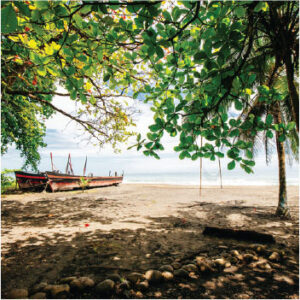
Overlooked Costa Rica: Expat Life on the Caribbean Coast
Name: Bruce CromartiesFrom: North CarolinaLiving in: Costa Rica Playa Negra—an up-and-coming neighborhood on Costa Rica’s Caribbean coast—flanks a bay of black volcanic sand....
Where to Buy Property in Italy… and One of the Major Benefits of Overseas Real Estate
◼ Dale says: My wife and I love Italy and are interested in buying a second home there, preferably something in...
Housesitting: Our 3-Year, Rent-Free European Tour
Name: Paul Emberger and Todra PayneFrom: Los AngelesLiving in: Roving “As housesitters, we stayed in areas the tourists don’t know about… and learned...
Overlooked Costa Rica: Expat Life on the Caribbean Coast
Name: Bruce CromartiesFrom: North CarolinaLiving in: Costa Rica Playa Negra—an up-and-coming neighborhood on Costa Rica’s Caribbean coast—flanks a bay of black volcanic sand....