


12 min to read
|Jan 2023
Curiosities, Quirky Tidbits, Useful Notes
 1
1 Print or download


A remarkable French abbey… The waterfalls of Costa Rica… The origins of tapas… Portugal’s digital nomad visa… A magical art exhibition in Japan… and more.
Picnic Atop a Centuries-Old French Abbey

©TOURIST OFFICE OF BEAUCAIRE TERRE D’ARGENCE
Nestled in the Provençal scrubland of southeastern France lies the Troglodytic Abbey of Saint-Roman (about a 30-minute drive from Avignon). An architectural wonder, the imposing limestone structure is the only one of its kind in Western Europe. A site of pilgrimage and worship, it contains a series of vaults, tombs, and cave-like cells previously used as monastery dwellings by the Benedictine order.
The caves, along with a 300-foot-long chapel containing the remains of Saint Roman, were carved into the limestone by hermits, and later by the monks themselves, over a period of almost 1,000 years.
While the lower half of the site feels ripe for an Indiana Jones adventure—complete with LED candles casting an ephemeral glow along the hollowed-out rock—the upper level is the real showstopper. The abbey’s monolithic limestone terrace, which holds the vestiges of medieval fortifications that were dismantled in 1850, can be accessed by a single spiral staircase protruding through the rockface. An astonishing panorama awaits.
Surrounded by a blanket of Aleppo pines, holm oaks, and bristling Mediterranean shrubbery, visitors can trace the bends of the voluminous Rhone River as it crosses paths with some of the most spectacular scenery in all southern France. Medieval castles, like nearby Tarascon, hold court with smatterings of blonde-stone Provençal villages, romantic mountain ranges like Les Alpilles (the little Alps), and towering peaks like Mount Ventoux—a stop on the Tour de France.
To make this experience even more memorable, travelers can book an evening aperitif atop the abbey via the tourist office in the town of Beaucaire. You’ll need to call into the office in person to book.
Guests get an “apéro box” full of Provençal specialties like goat cheese wedges wrapped in filo dough, herbed mini-meatballs, and paper cones filled with French charcuterie. Local winemakers set up shop along the chalky plateau with a selection of vintages from the nearby Costières de Nimes appellation. Sunset views of the Rhone River Valley pair quite nicely with the crisp rosés.—Tuula Rampont
Chasing Waterfalls on the Costa Ballena

©SESTOVIC/iSTOCK
The 22-mile Costa Ballena (Whale Coast) in Costa Rica’s tropical Southern Zone consists of three main coastal towns—Domincal, Uvita, and Ojochal. Here, the verdant green mountains plunge into the tropical, often deserted, jungle beaches. And the area boasts an astounding 15 picturesque waterfalls.
The most spectacular around here are the Nauyaca Waterfalls (located about six miles outside of Dominical). They are in a canyon that’s about 260 feet wide and the highest waterfall tumbles 148 feet into a natural pool that is suitable for climbing and swimming. The falls have been “discovered” so to speak, so you will find more tourists here than at some of the lesser-known falls, and there is an entrance fee of $10 to get onto this family-run property. But to see the falls in all their magnificence is well worth it.
The moderate-to-challenging jungle hike through a canyon will take nearly an hour each way. However, you can also opt to travel to the waterfalls via 4×4 truck or on horseback (both cost $80 per person and include lunch and the entrance fee…you can book a tour on the website here). Whichever way you choose, you will be surrounded by verdant tropical rainforest, curiously chattering white-faced capuchin monkeys, and breathtakingly colorful red macaws.
If you have time, I’d recommend you also visit a number of other—albeit smaller—waterfalls in the area; Poza Azul, Cascada Verde, and El Pavon, to name a few.—Kathleen Evans
“With the Cover”—The Origins of Tapas
If you’ve ever visited Spain, you’ll have experienced the culinary delight that is tapas—little nibbles, usually cured meats, cheese, or bread served with your early evening tipple. Every town, city, and region around the sunny Iberian Peninsula claims to have invented this cultural icon.
Lots of colorful stories claim to explain the origin of this delicious snack. One theory is that in the 13th century, King Alfonso X was struggling with an ailment, for which he was prescribed an immense amount of wine. To avoid slipping into a state of utter intoxication, he ate small portions of food with his drinks. Finding the method successful, he decreed every home and tavern should serve a small amount of food with alcoholic beverages, in a bid to curb public drunkenness.
Another theory is that workers, held hostage to the waning daylight to complete their tasks, would eat only quick, small, and cheap meals in order to return to their labors as quickly as possible.
“Tapas” (or tapar, the verb), in the most literal translation from Spanish to English, means “cover.” This leads to my personal favorite tapas origin myth.
King Alfonso XIII was traveling to the town of Cádiz and stopped for a quick cup of wine in a local tavern near the beach. It was a particularly windy day on the coast, so his server reportedly placed a small slice of cured meat over the glass, to protect it from the sand being blown around them. After eating the ham, and downing his vino, King Alfonso orders another glass…”with the cover.”—John Wallace
A Colonial Mexican Artistic Haven

©PAIGEFALK/iSTOCK
Although just an hour from buzzing Cabo San Lucas on Mexico’s Baja Sur Peninsula, the pueblo magico of Todos Santos feels like a world away. Oozing colonial charm and laidback vibes, it’s something of a hidden gem. For years it flew under the radar and it was only when the road from here to Cabo was paved in 1984, that Todos started to be discovered.
Today it’s a laidback artists’ haven. You’ll find artisan markets, art galleries, attractive boutique hotels, and inviting cafés. And miradors (viewing points) all around town offer stunning vistas of the shimmering Pacific Ocean.
Though you can cover the entire town on foot in a day, it’s worth spending a night or two to really explore. In the old town, you’ll saunter past attractive murals, neatly tiled plazas, and bougainvillea-adorned walls. Don’t miss the stunning Sun Stone Aztec Calendar, beyond the open plaza and Teatro-Cine. Created in 2012 by the communities’ Heaven on Earth artists, it covers a large outdoor wall in an open court.
After working up an appetite, hit The Tequila Sunrise Bar & Grill, for one of their popular margaritas and a plate of chili rellenos stuffed with shrimp or lobster. After lunch, wander down the street to Baja Tasty for ice cream. Their exotic maracuya (passion fruit) ice cream—a perfect balance of sweet and sour. Or opt for a more traditional scoop of coffee and chocolate chips.—Ann Kuffner
Portugal’s New Digital Nomad Visa

©SEANPAVONEPHOTO/iSTOCK
One of the many reasons Portugal topped the IL Annual Global Retirement Index for 2023 was the choice of options for getting a long-term visa. Popular visas for North Americans right now include the Golden Visa (read more about the recent changes to this visa in my article on page 8) and the D7. But, there’s a new kid on the block…
Portugal recently unveiled its new digital nomad visa, joining a whole host of countries from around the world who are enticing remote workers to their shores. Under this program, workers who have the ability to live and work from anywhere—those working for foreign companies, or freelancers—can apply for a digital nomad visa that gives them residency in Portugal for either a one-year or five-year span. And it’s renewable.
The requirements are fairly easy to meet: Proof of earning at least €2,836 per month ($2,900) for the last three months, and proof of employment with a non-Portuguese company, or proof of work as a freelancer. That’s pretty much all.
You’re not limited in where you can live in Portugal, and after five years in-country you can apply for citizenship and a Portuguese passport. You can start the process by contacting the consular section of the Portuguese Embassy in your home country.—Jeff D. Opdyke
Go on a Sleep Vacation to Portugal

©ANTONIO DUARTE/iSTOCK
When we go on vacation, we tend to kick back and sleep more. But what if your getaway was ALL about sleeping?
A Journal of Clinical Sleep Medicine study found that 40% of participants reported a reduction in their sleep quality in the last few years. Add to this a change in attitudes about sleep and how a lack thereof can cause issues not only with our bodies, but also our minds, and it’s not that surprising that a new trend of “sleep tourism” has emerged.
High-end hotels have been offering services like sleep-inducing meditation recordings, pillow menus, the option of a weighted blanket, specially developed bedtime teas, and scented pillow mists.
Even bed manufacturers are getting in on this trend. The Swedish bed-maker Hästens opened the first Hästens Sleep Spa Hotel, a boutique, 15-room hotel, in the heart of the Portuguese city of Coimbra (see their website here). Everything is designed to ensure you get the best night’s sleep…starting with the €50,000 bed you’ll lie in. The bed linen is of the finest quality (300 thread count) and is made to complement the bed in regulating your body temperature for the ideal sleeping conditions. And you can pick from 14 different pillows.
If you’re interested in the perfect night’s sleep in Portugal, you can stay only one night at the Hästens Sleep Spa Hotel, where €500 per night will get you all your food and drinks and a breakfast consisting of only locally produced food. Plus, of course, a night of luxurious, restful sleep!— Nazareen Heazle
Berlin’s Secret Underground City
Hovering above my head, the atomic bomb lingers precariously. Ten feet long, thicker than an oil barrel, dark and green, and glinting menacingly in the light’s glare. Fortunately, this is just a scale replica of “Little Boy,” the atomic bomb that was dropped on Hiroshima. It’s difficult to focus with it hanging overhead, as our tour guide explains just how much of Berlin would have been annihilated had a similar bomb been dropped on the city.
I’m 35 feet beneath the bustling, historic streets of the German capital, in the belly of the Berlin’s “Unterwelten” (Underground). It consists of both the subway system, the U-Bahn, and an intricate network of bomb shelters created by West Germany during the Cold War.
Underground, the bunker is gray, dark, sterile, and cold. Enormous reinforced concrete gates and rough, thin canopy beds, stacked in fours almost to the ceiling add to the feeling of claustrophobia. I try to crank the old electricity generator and after only 60 seconds, my arms are aching. Should the bombs have started to fall, this generator would have been responsible for providing emergency power to the roughly 3,300 people who would have sought refuge within these bunkers.
Incredibly, the bunkers are linked directly with the U-Bahn. So, during the tour, as you move from one bunker to the next, you’ll sometimes pop out of a door and find yourself smack bang in the middle of a crowded subway station, met with raised eyebrows and puzzled commuters.
The tour costs €15, and your guide will offer real-life stories of wartime Berlin, the schemes for building this vast network of over 3,000 bunkers, and the various contingency plans should the world have reached that most feared tipping point. To find out more, see the Unterwelten website here.— John Wallace
Interactive Art in Niigata, Japan

©GREG GOODMACHER
Among the rice fields, woods, and forests of northern Japan is not where you’d expect to find magical, interactive art exhibitions. But in rural Niigata (about four hours north of Tokyo), weird and wonderful outdoor pieces pop up in unexpected places, as part of the Echigo Tsumari Art Field.
Strolling along rice fields, you’ll see yard-long pencils swinging above your head, and house-sized polka-dot-painted flowers created by Japan’s abstract artist Yayoi Kusama. Birds with bat wings wearing suits and ties stand in fields in a homage to Rachael Carlson’s book on pesticide pollution.
The Tunnel of Light is the most popular exhibition and leads walkers through a deep mountain. Artists designed the breathtaking tunnel, so natural light pours through several wide oval openings above an untamed river coursing through a rocky gorge. At the end of the tunnel is a smooth reflective pool of water. The pool reveals the sky, the V-shaped valley falling into the Kiyotsu Gorge.
The House of Light, designed by American artist James Turrell is an indoor/outdoor art exhibit. Part of the ceiling slides open at the push of a button, revealing the stars, sun, or clouds. The house is a daytime public art installation, but guests can rent it for overnight accommodation. It’s a perfect base for exploring rural Japan. You can learn more about The House of Light and the Echigo-Tsumari Art Field right here.—Greg Goodmacher

Also in This Issue
Calendar: Retire Early With This Portable Side Income
“Online Income Engine” Masterclass (Online) • March 11, 2023 A future-proof portable income. That’s what this is about. Ian Bond,...

A Little Piece of Island Paradise
The clear, turquoise water laps gently against bright, powdery white sand. To my right the beach cones to a point...
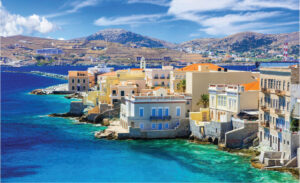
A Warm Welcome and a Happier Life in Europe
“I Live in My Happy Place and Can Easily Pay My Medical Care” Name: Karen Lefebre-ChristouFrom: Austin, TexasLiving in: Syros, Greece Have you...
Calendar: Retire Early With This Portable Side Income
“Online Income Engine” Masterclass (Online) • March 11, 2023 A future-proof portable income. That’s what this is about. Ian Bond,...
A Little Piece of Island Paradise
The clear, turquoise water laps gently against bright, powdery white sand. To my right the beach cones to a point...
A Warm Welcome and a Happier Life in Europe
“I Live in My Happy Place and Can Easily Pay My Medical Care” Name: Karen Lefebre-ChristouFrom: Austin, TexasLiving in: Syros, Greece Have you...